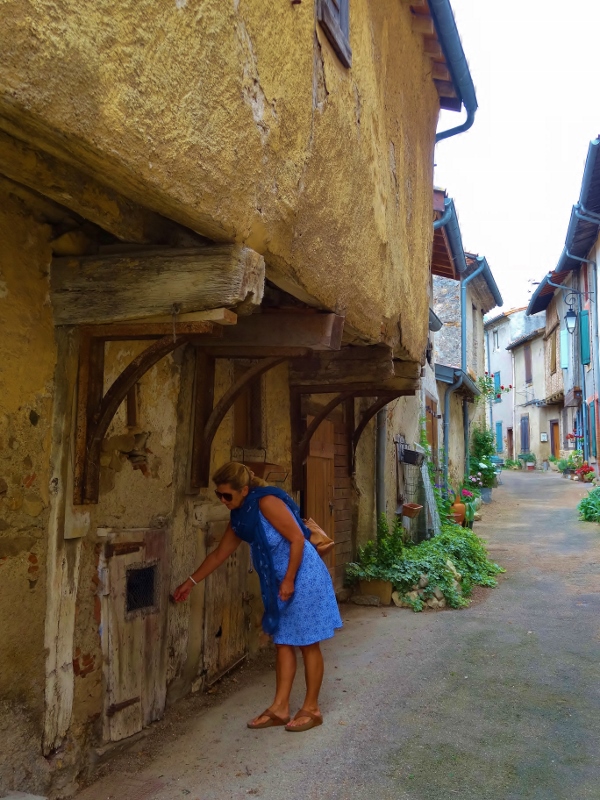
You have to like a person very much to be able to go traveling with them……
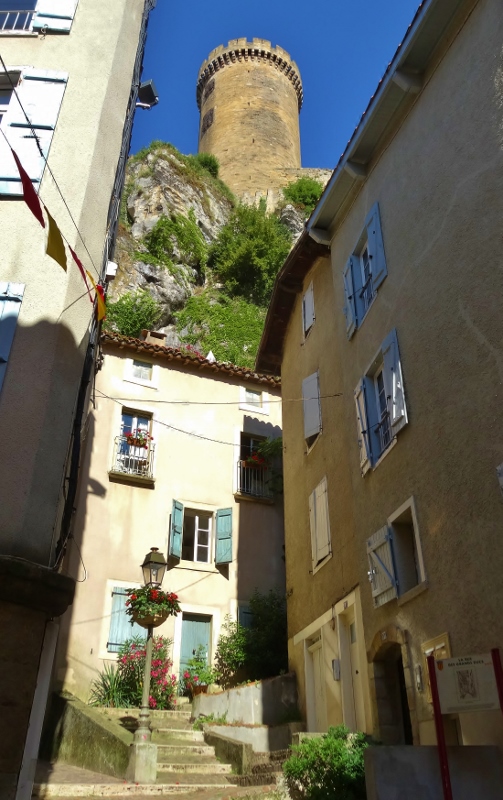
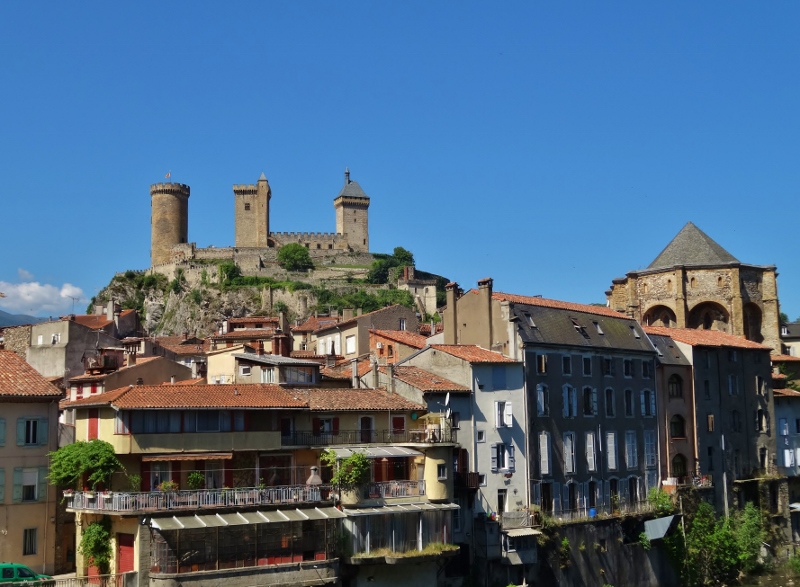
We packed up the patio the night before, with the plan to get moving a bit more speedily. We had two things to see on Thursday and then a bit of a drive to the next campsite; no more lingering and loitering for us. We have been travelling at the speed of the Continental Drift; it’s time to get back on the Jetstream. We took the rive gauche route to Foix; the dual carriageway would have been quicker, but, hey, we missed the turning in Tarascon and it turned out to be a pretty route. The rest of the plan we had plotted on Wednesday, was exactly what we did do on Thursday. Foix is not a very big place, so it was only a short stroll through the narrow streets to the base of the rocky outcrop that the castle sits upon. But from there it was a very steep, exhausting climb up to the ticket office. Having climbed that far, you feel you have to pay to go in, even though there is very little left of the castle itself. There are really only a few rooms and three rather tall towers, one round, one square and one rectangular with a rather jaunty roof. They tower (sorry) over the town and the views are really worth the strenuous ascent up the spiral staircase to the top of the round tower. I’m not sure why, but we repeated the tiring exercise up the square tower; the view was exactly the same. However we didn’t go up the third tower because thankfully it was locked shut.
Back in the town, we picked a café for a reviving cold drink and found that everyone around us, from various nations, were all speaking English, even the French waitress. We checked with the American tourists and their English tour guide, who were sat next to us, and they were pretty sure we were still in France. I’m still struggling to leave my Spanish words behind and trying to tune in to French, but a lot of people are still getting a “gracias” and a “si” from me. We’ve moved away from the tricky Catalan language with its odd words like cops, which means bumps, prats which means meadows and the wonderfully named bugaderias. But now we have Occitan words popping up; my current favourite is pog, which means a mountain, therefore Rodney is now my favourite pogman. To get to our next stop, we had to drive back south and then east; yes I think we are going around in circles…….a bit.
In 2012, before we set off on our first expedition in Eileen, our friend Lynda lent me a book, Labrynth by Kate Mosse. We both read and enjoyed it, then bought and devoured the next two books in the trilogy, Sepulchre and Citadel. Most of the action is set in the area we were now in, between Tarascon sur Ariège and Carcassonne, the Pic de Soularac and Rennes les Bains. Having enjoyed the books so much it was good to now visualise the actual settings and bring the stories more to life.
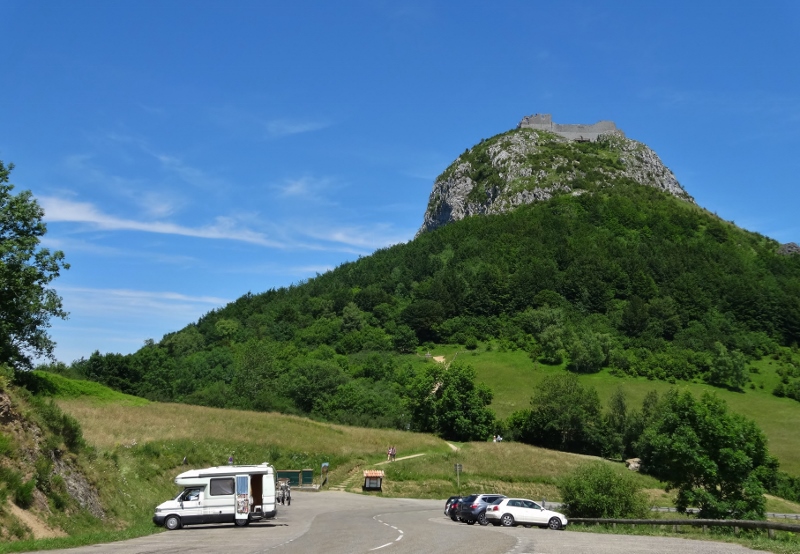
Top of Rodney’s list was a visit to Montségur Castle, a spectacular place with a terrible history. It is perched on the highest part of a rocky bluff at 1,207m and it involves a very tough hike up one of the steep sides of the rock. At the beginning of the 13thC Cathars, considered as heretics by the Pope, made the castle their home. Six hundred of them lived on the site, but a siege was started by the King of France to appease the Catholic Church and it lasted for eleven months. Some unsuccessfully tried to escape and eventually a fifteen-day truce was agreed, at the end of which the Cathars had to renounce their faith or be burned at the stake. So, on 16 March 1244 more than 220 Cathars refused to give up their faith and were burned alive at the base of the rock. Beside the path leading up to the castle, there is a monument commemorating their martyrdom. Historians consider that the tragedy at Montségur instigated the end of the Cathar religion in France.
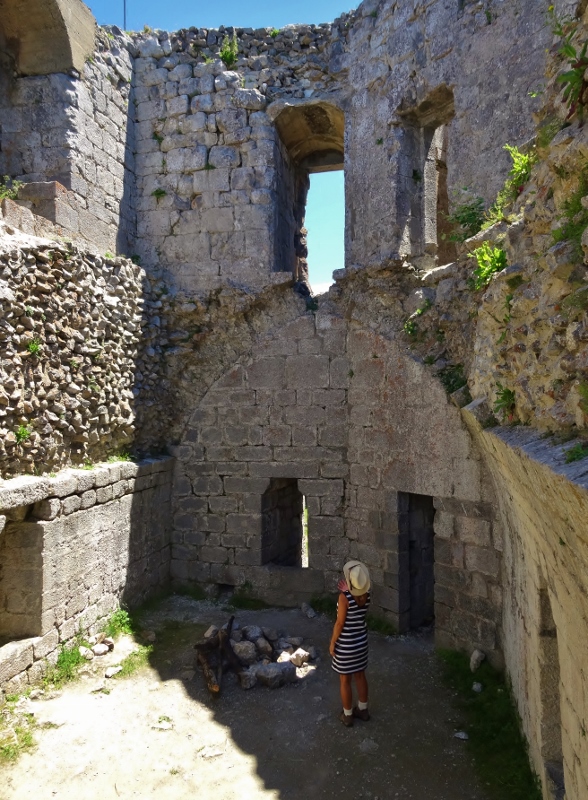
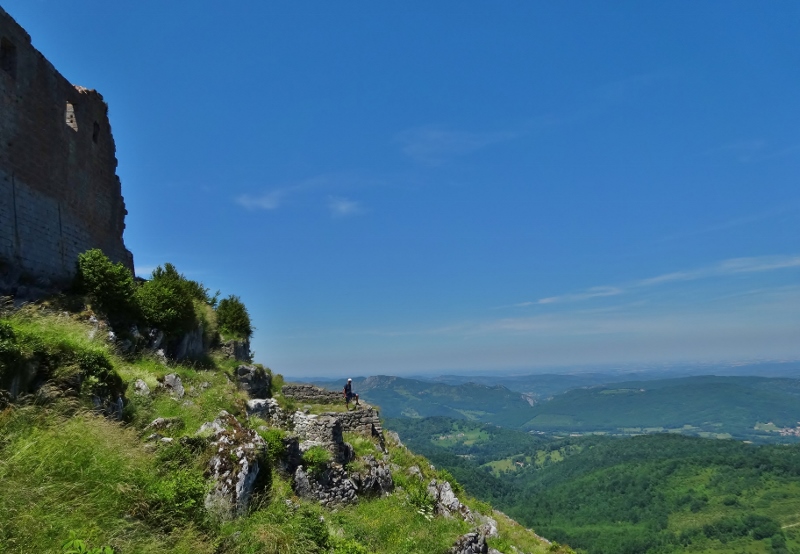
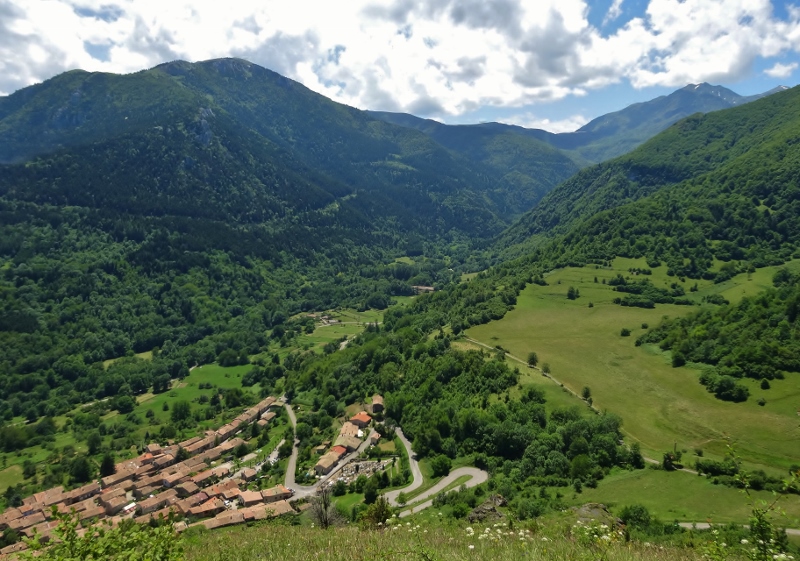
It was a desolate place and hard to imagine how that many people could have lived in such a small area, perched so high away from a river, or any food source, but the 360° views are amazing and for us it was well worth the climb to such a fascinating and significant spot. There is now a small village set along the sides of the valley below; all the houses are in lines along the contour of the hill and face south; it looks rather unusual. We had a good mooch around the village and its small museum, and then continued our drive out through the narrow valley to Bélesta. We followed the main road east through Puivert, Quillan and Couiza and then turned off past Coustassa and up the Salz river valley to Rennes les Bains.
We followed the signs to the campsite and were very surprised when it came in to sight. We had to cross a ford over the river to get to the entrance, which seemed a bit precarious and rather unique! The Salz has many hot springs and spas around it, so the river is not freezing and there is a lot of algae growth on the rocks, but we really didn’t fancy slipping in there. Thankfully the crossing was dry, and we made it across the narrow strip of concrete, but there must surely be another way in, for when the spring snow melt must raise the water over the ford?
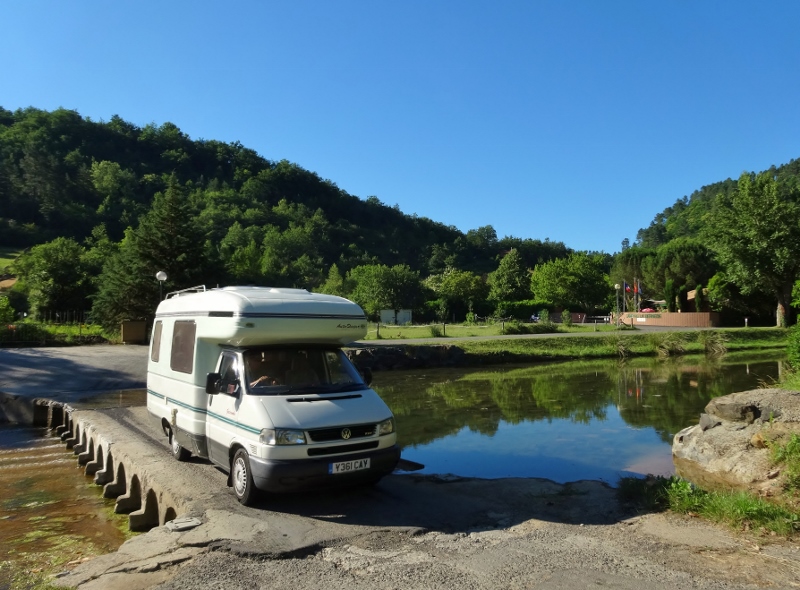
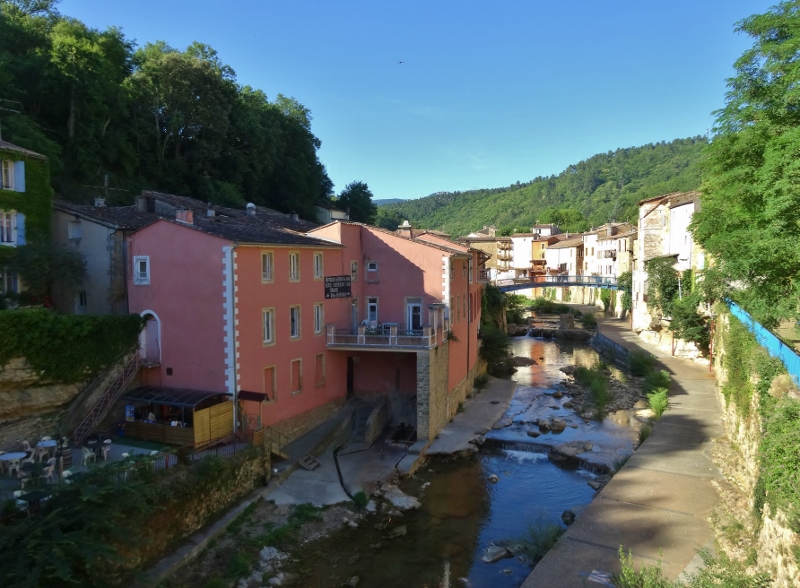
We spent one very quiet night at Camping Bernède and the next morning safely crossed back over the ford and down in to Rennes les Bains. It was still very early, so we only strolled around the village for ten minutes or so, and then drove back out of the valley, north towards Limoux. After so long looking at mountain scenery, it was refreshing to see fields of grapevines again. As we turned west, across country out of Limoux, we could still just see the patches of snow on the Pic de Soularac and the Pic de St Barthélemy, far away in the distance, but we also spotted our first fields of sunflowers near Loupia; though only a few were in full flower.
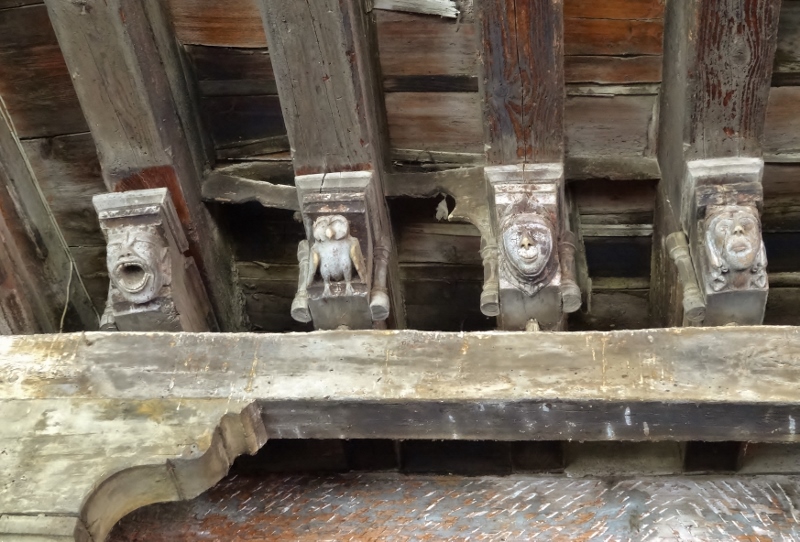
When we reached Mirepoix, we parked Eileen under a big shady tree and strolled to the Porte d’Aval, the only remaining bit of the 14thC walls that originally surrounded the bastide village. It’s an attractive, gentle town, with a very ancient mediaeval heart, the Place des Couverts. The whole of the central square, which is filled with grass, flowers and small trees, is still surrounded by mediaeval galleries resting on wooden pillars. A lot of the woodwork and beams at the Maison des Consuls are carved with over a hundred brilliant faces, birds and strange creatures.
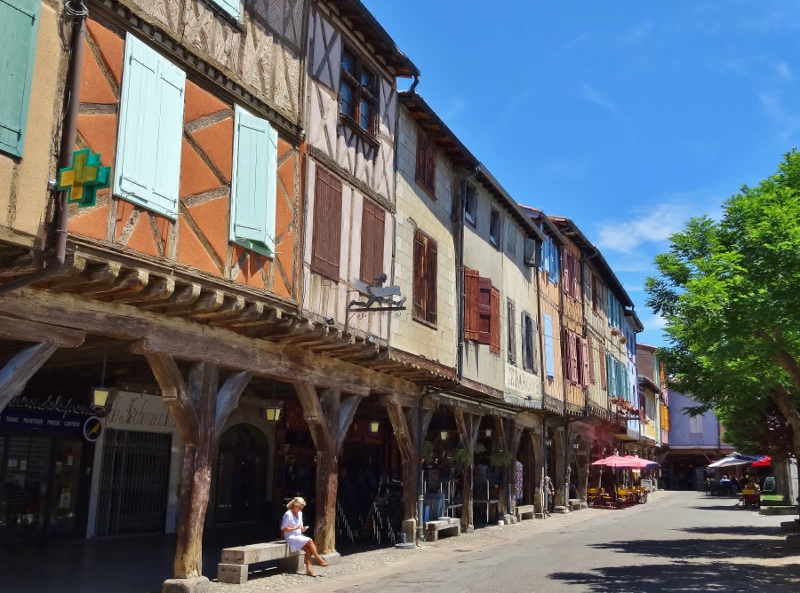
We stayed in the Place des Couverts for a rather nice lunch at Le Petit Bouchon, which I reckoned translated as The Small Plug; seemingly a rather strange name for a restaurant. When we finished our meal I had to ask the waitress to explain the name and she said it is named after the stopper that goes in a bottle, not a cork, but a……..bouchon.
Looking at the map, we haven’t moved very far north, we’ve been hovering close to this latitude for weeks, so in the afternoon we tootled north up past Fanjeaux (I blinked and missed it), around Castelnaudry, through Revel and finally pulled up at Camping Saint Martin in Sorèze; phew, no ford crossing into this one. It was 34°C and we were both hot and sticky, so after setting up and having a cold drink we headed to the campsite pool to get the body temperature down; ahhh, heaven.
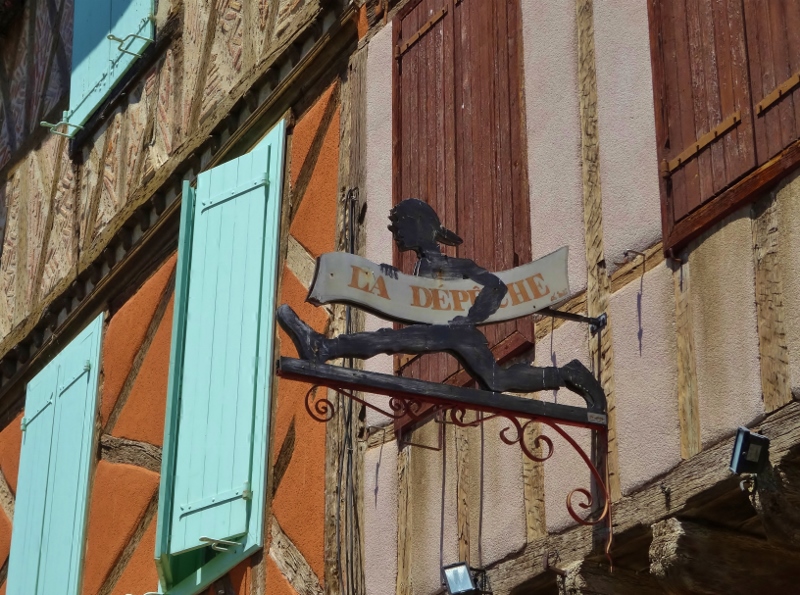
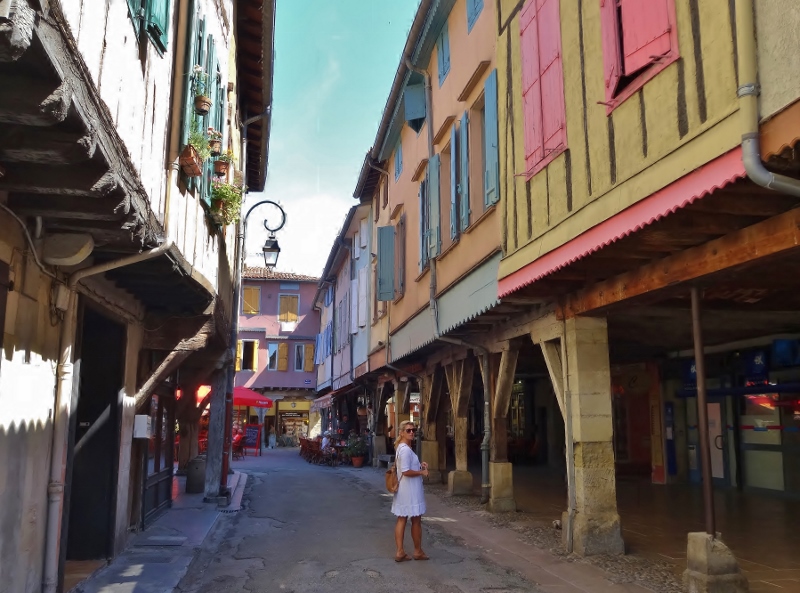
After the heat we’ve been having, it was a shock to wake up on Saturday morning and find the thermometer hovering around only 20°C and the sky a very blank white. The swimming pool didn’t seem quite so inviting then, so we wandered round into the ancient and pretty village centre. It was dead, hardly anyone around, apart from a few other tourists wandering the empty mediaeval streets, looking for something to look at.
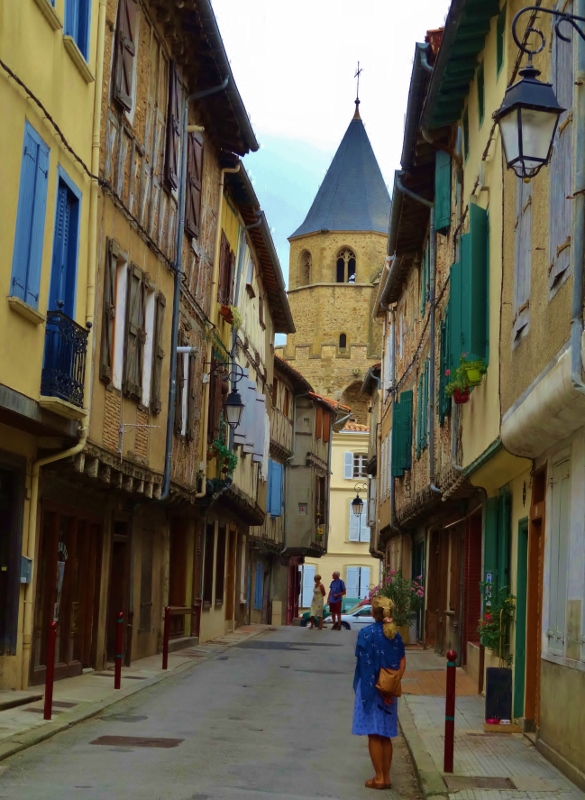
We found an artist, whose doors were open and wandered in for a look at, not just his paintings, but the inside of the mediaeval house that his studio was set up in. We read every sign in the streets that point to historical facts and details and finally ambled back to the campsite to spend the afternoon playing catch-up. On Sunday we’ll head to the city of Albi and hope there is a little more life in its streets.