Silence speaks when words can’t.
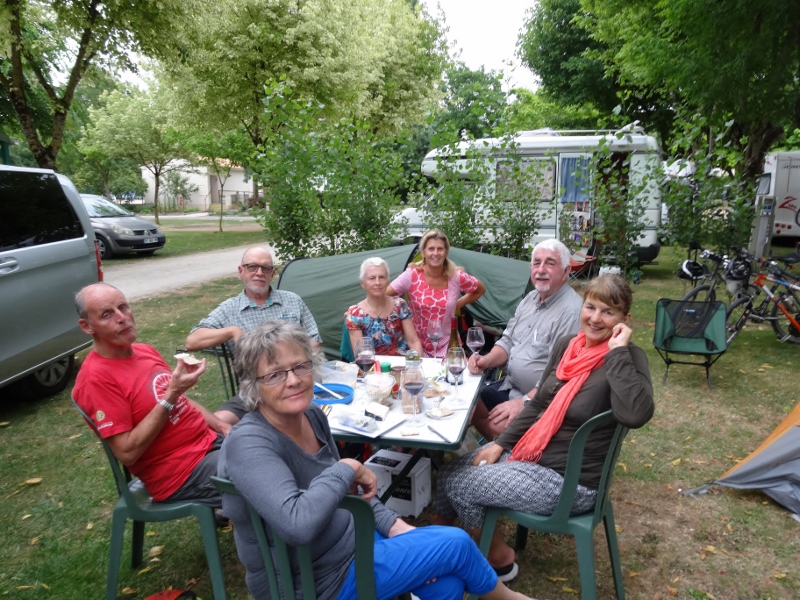
On Monday evening, we didn’t cook and we had no salad items, but Camping des Alouettes prepares a three-course dinner twice a week and Monday happened to be one of those nights. So we had booked ourselves in. Eight of us sat down to eat a meal of salad, steak and frites with a delicious apple crumble for dessert. There was a Welsh couple, two Dutch couples and us, all happy not to be cooking in the heat and it turned out to be a lovely evening of lively conversation on a crazy mix of subjects. Three of the four couples had all planned to visit Oradour sur Glaine the next morning, and as it turned out, John and Roz from Mumbles in Wales, were checking out at the same time as us on Tuesday morning, so we had us a small convoy. Actually, we just followed them down the narrow country lanes, knowing if they could get through in their larger campervan, so could we.
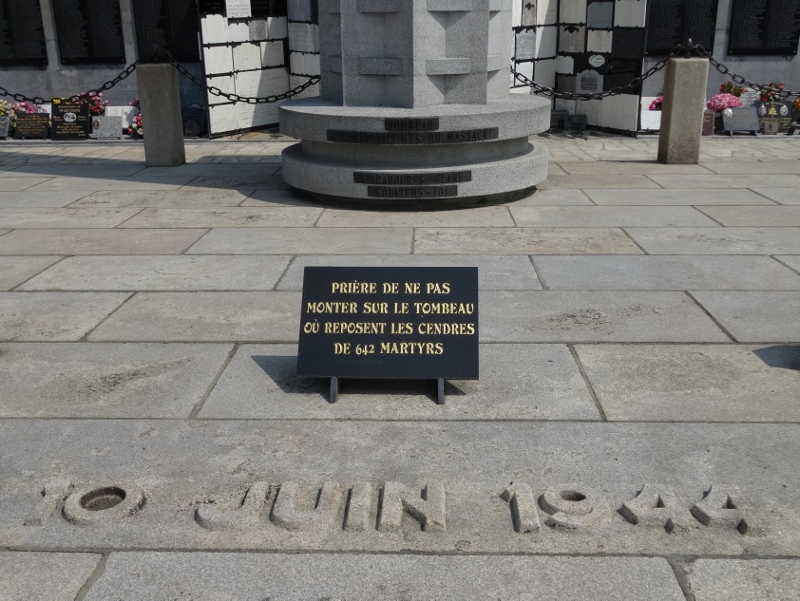
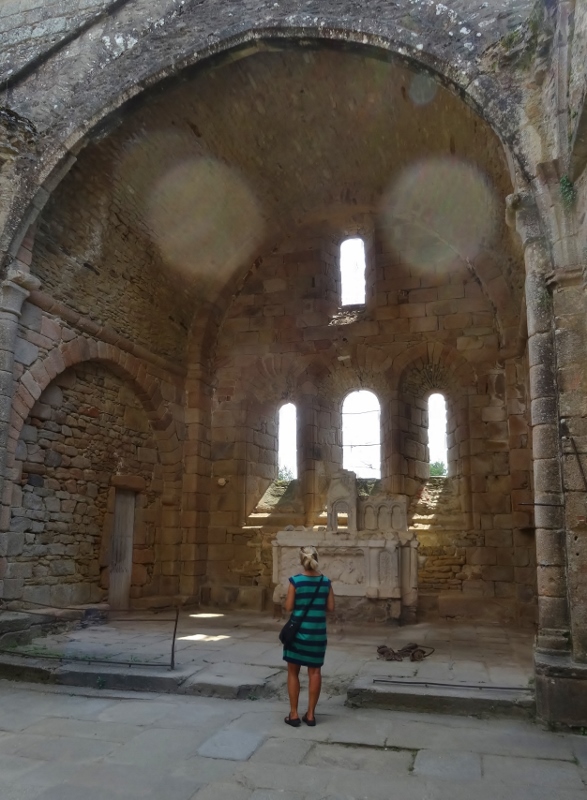
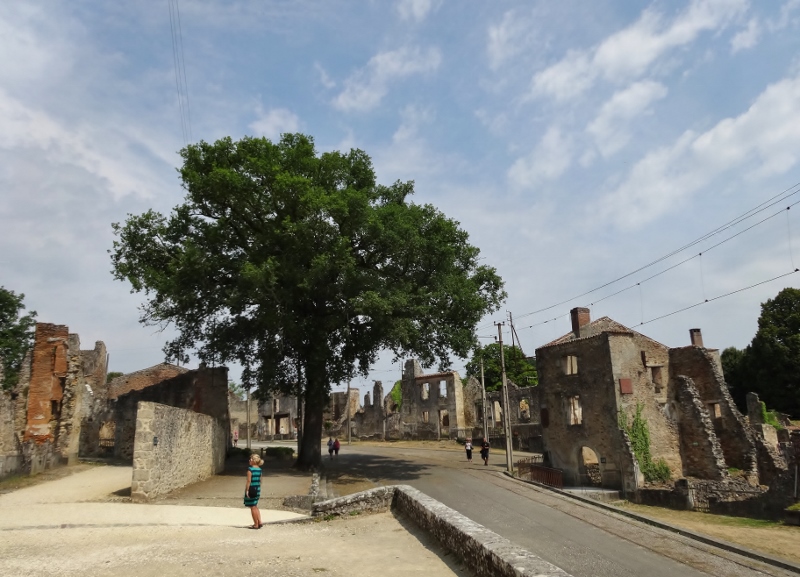
When we arrived in Oradour sur Glaine it felt like all jollities would cease. There really is an aura of quietness about the place and it has a very sad history. On Saturday 10th June 1944 the people of the large Limousin village were getting on with life as normal. At 2pm two hundred Waffen SS troops arrived and encircled the village, sealing off any escape routes. The villagers were all forced into the Place du Champ de Foire, the soldiers searching every house and building to ensure they had assembled everyone. They separated the men from the women and children on opposite sides of the square. All the men were then taken to various barns and garages; anywhere with few openings and the women were all taken to the church.
At 4pm, Major Adolf Diekmann fired a revolver to give the order to simultaneously fire on all the men in the barns; they then covered the bodies in combustible material and set them alight.
At 5pm, an incendiary device was placed in the centre of the church and grenades thrown in amongst the women and children.
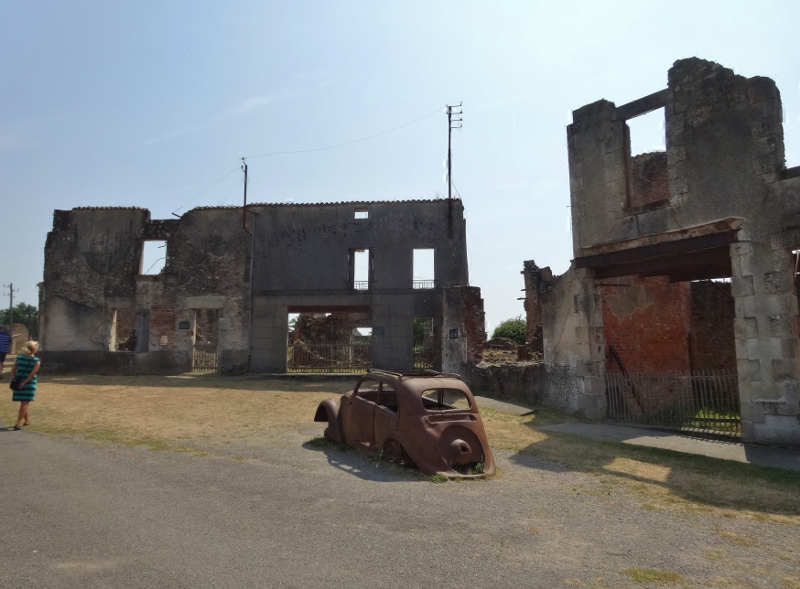
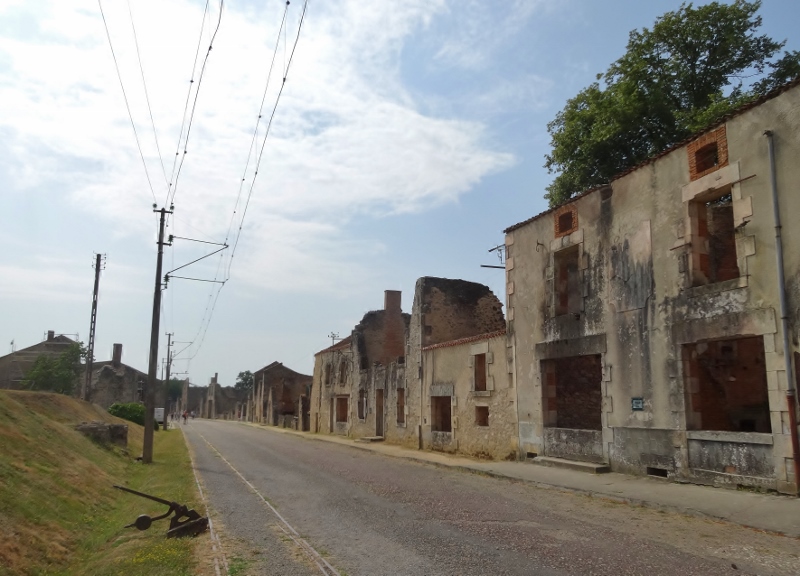
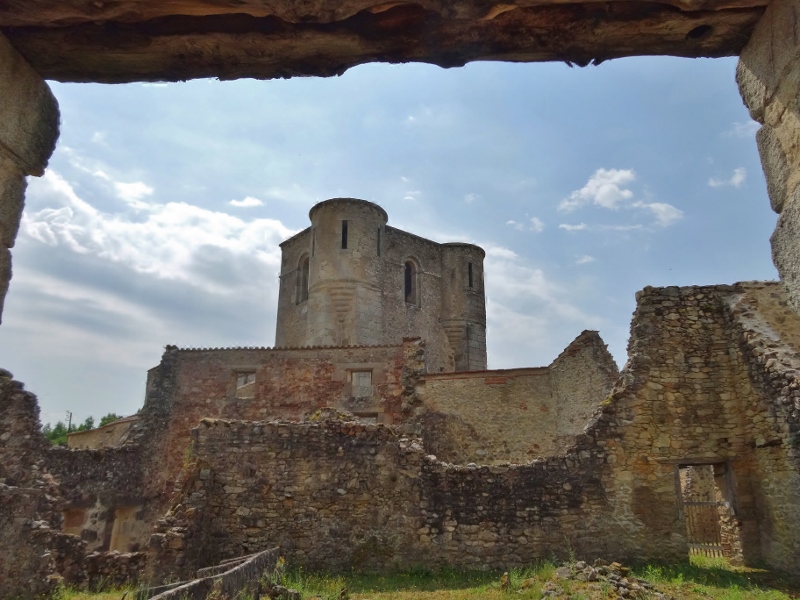
Only five men and one boy escaped from one of the barns, and only one woman escaped with her baby through a window in the church. The SS troops ransacked the village, taking anything they wanted, then smashing and burning every building in the village. 642 people died in those few hours, 247 of them were children. The wreck of the village has been left exactly as it was after that terrible event. Every building is destroyed, there are burnt out wrecks of cars and one of the more startling sights for me, was the number of rusty sewing machines sitting amongst the rubble. It has to be one of the saddest places we have visited and a very stark reminder of the horror and absurdness of war.
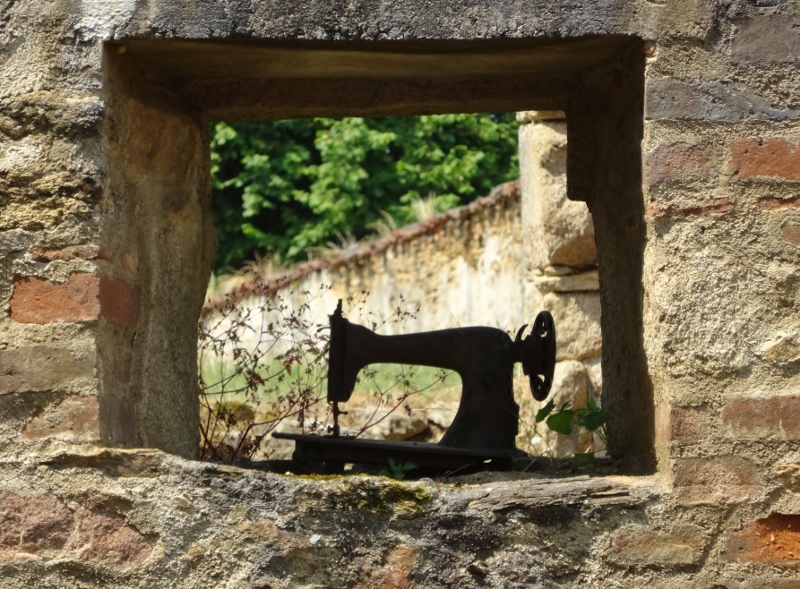
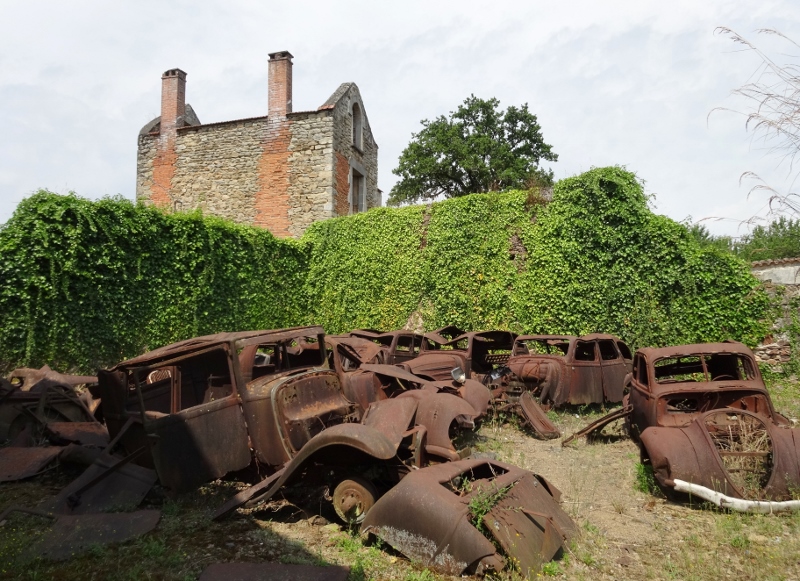
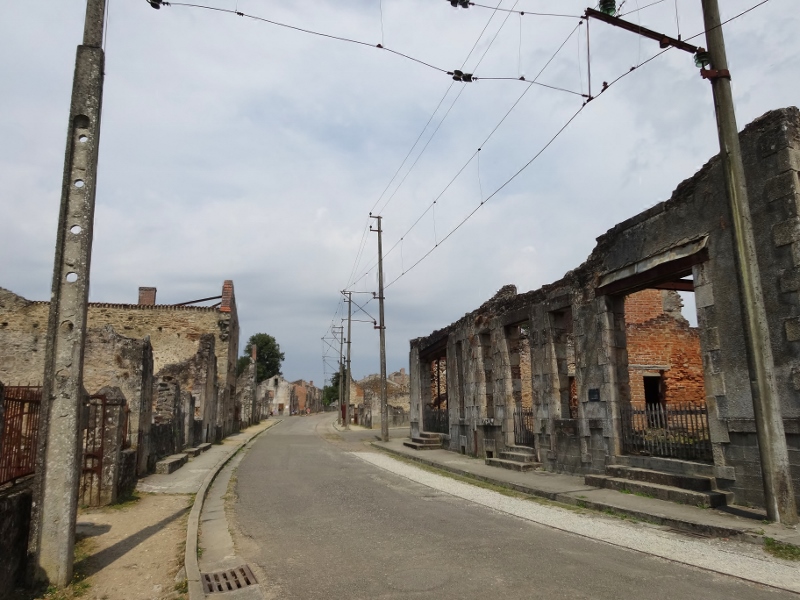
A completely new village of Oradour sur Glaine has been built just up the road, with an underground memorial centre between them. It took us more than an hour moving slowly through the memorial centre and even longer wandering around the ruined streets. Everyone passing through the dreadful scene was respectful and quiet; somehow you just couldn’t be anything else. It is hard to describe your feelings as you read and listened to the awful details of what happened, but I know when I stood in the doorway of the derelict church, I found it hard to step inside without imagining the terror of the women and children. It is very hard to understand the inhumanity of what happened that day.
From Oradour sur Glaine, we drove about 150 kilometres to Camping la Venise Verte near Coulon, just west of Niort. We selected an empty pitch, number 75, because the adjoining pitch was empty, and I think we were both still feeling rather sad and reflective. Before we were even fully settled, a flock of six ‘senior’ kiwis flew in, no sorry, they cycled in and set up their tents on pitch 76. After putting our smiles back on and exchanging a few pleasantries and insults, we discovered they were from Waiheke Island, which is in the Hauraki Gulf about 18 kms from Auckland in New Zealand, and it’s not a big place. We’ve been there a couple of times to see our friends Glyn and Darryl who used to live there, so we threw their names in to the conversation. Unbelievably they know them and from the cheeky descriptions, they know them pretty well! We shot off a suitably derogatory email to Glyn and Darryl, followed by a photo of the flock, and as anticipated received an impudent reply from them in the morning. The message arrived just in time to pass to our cycling neighbours, before we waved them off on the next leg of their journey across France. Bon journée to our velocipede kiwis.