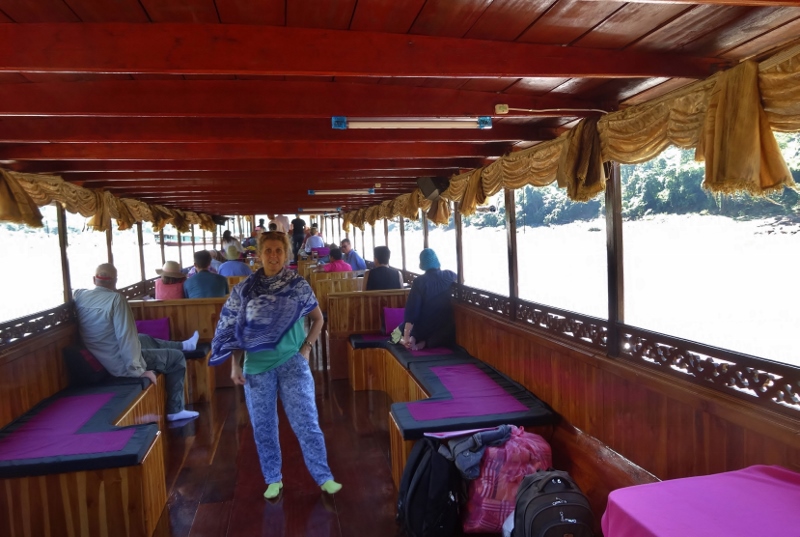
The written sign next to the fruit bowl had the helpful words “Banana is for service”. Hmmm, we won’t go there…..?
We were verbally informed that there were two toilets on board, one for men and one for women, but there was a complete lack of a signage to say which was which. Hence everyone used which ever one was free at the time….
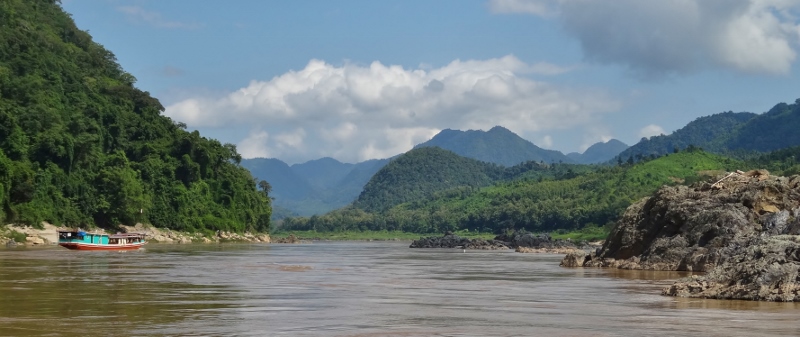
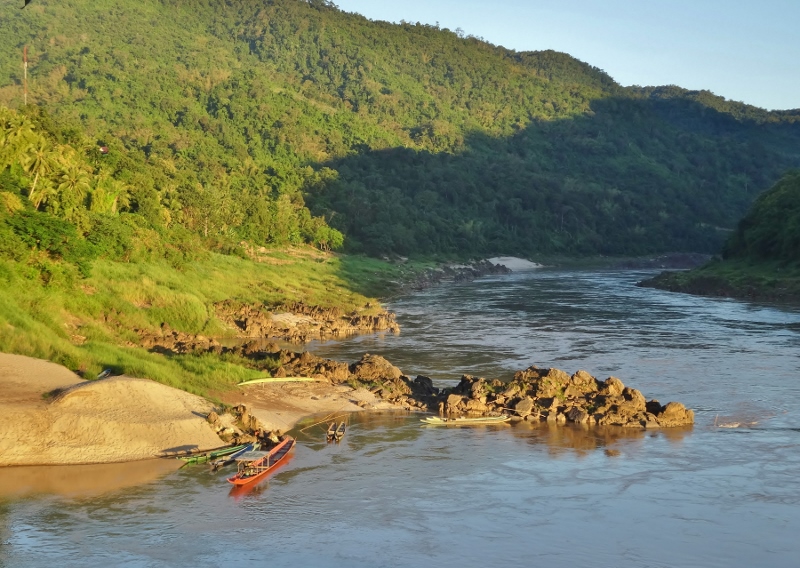
There were twenty-two of us on board, of all nationalities, and we mostly sat and watched the scenery passing as our slow open boat drifted down the Mekong on our Shompoo Cruise. All day the sky was blue with large towering white clouds standing like sentinels, but never covering us, or cutting out the sun. Pointy thin fast boats shot past us in both directions, their drivers and passengers often sensibly wearing shiny motorbike helmets. Sometimes a smaller long spear of a boat would slowly chug past us with just one person on board. We never saw any goods being transported on any boats and we also never saw a fish; not one. But there were plenty of bottles, plastic and glass, plastic bowls, bamboo and broken branches floating their way down the mighty Mekong. The only sounds were our chattering and the continual noisy chugging of the boat’s engine.
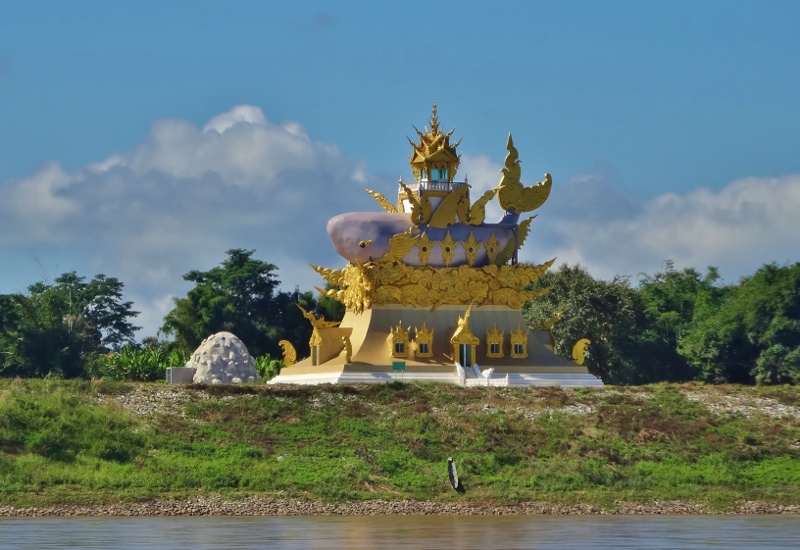
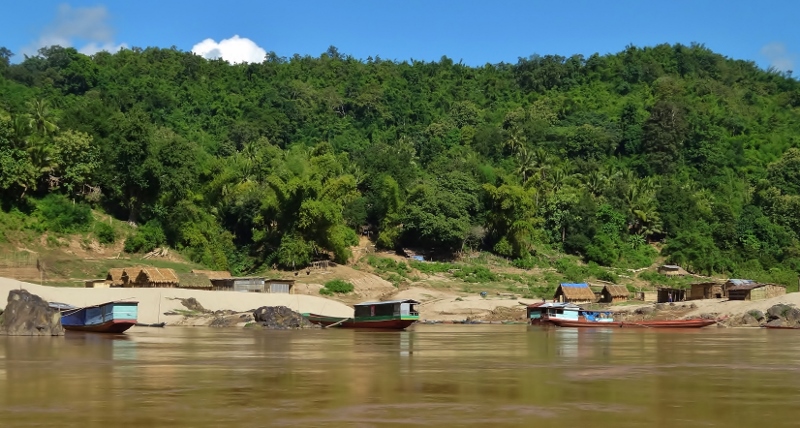
The river, constantly moving, was a murky terracotta brown with a froth of lighter brown where it hit the rocks and eddies. The rocks, grey, sharp and fractured appeared angry with the water. The only smooth shapes were the mounds of mud and sand creating beaches between the rocks on the riverside. The jungle on both sides of the river seemed to be one shade of green and the dense growth crept and smothered the twisted hillsides. Occasionally banana trees, in small clumps, never more than ten together, would break up the endless green with their different shapes. Rickety dwellings sat perched on flat banks, ready to be swept away by the next flood and some clung to rocky higher sections. Some looked like they would collapse into a heap under the weight of a raindrop.
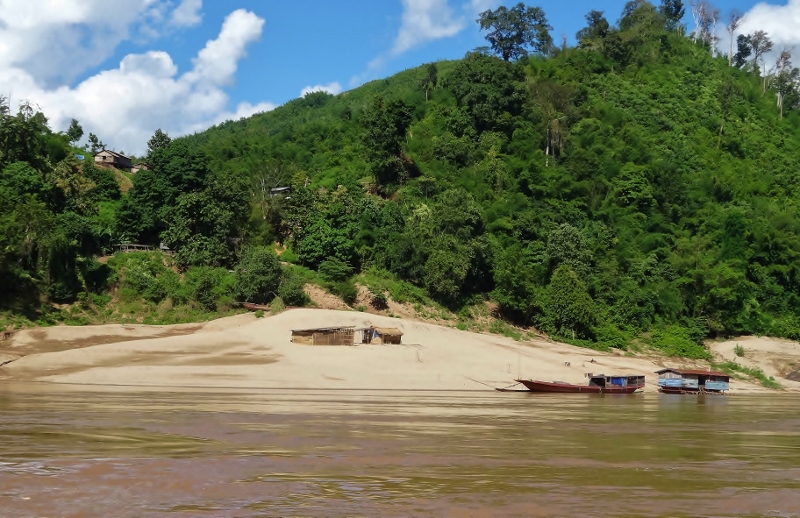
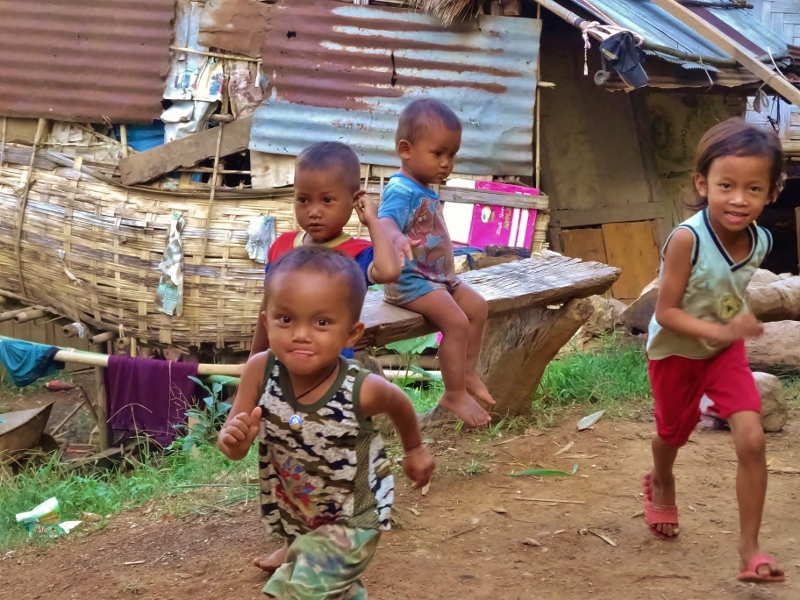
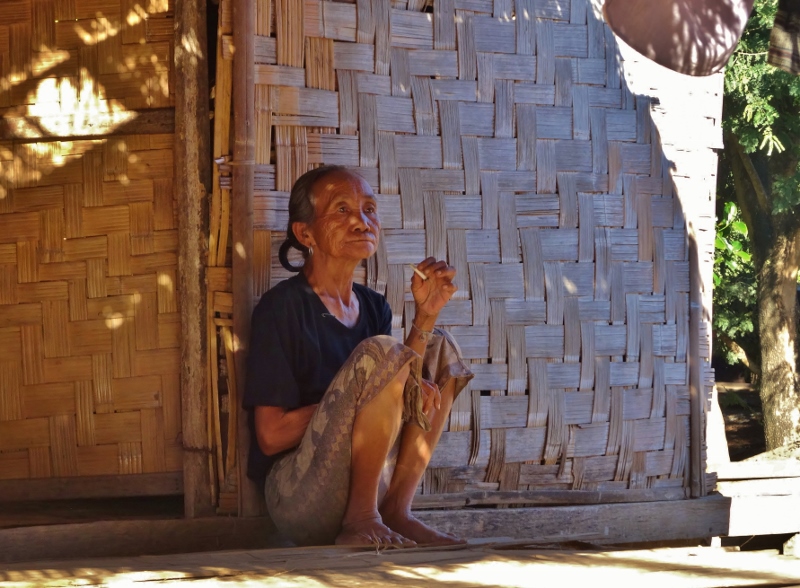
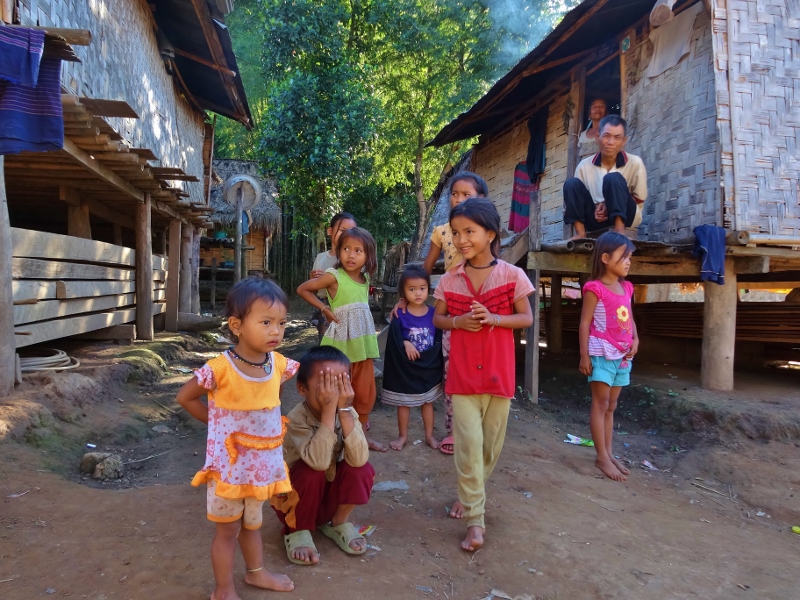
Water buffalo in cream, black, grey and some a warm shade of ginger, lazed about looking bored with life. Near to villages, long bamboo poles were wedged into rocks with lines or nets hanging from them like damaged spider webs. A few bloated, stinking dead animals bobbed past looking like a very sad loss for a poor family upstream. And the Mekong twisted and turned; sometimes we were sat on the sunny side and ten minutes later we might be in the shade. Mid-afternoon the boat was pulled ashore at a Kamu village called Ban Hue. There are three-hundred people living there, two hundred adults and one hundred children, in wooden shacks, scattered in the mud far enough away from the river to avoid floods. There is no school and one doctor visits on one day each year; it’s quite hard to understand that there are people living in such primitive conditions in this shiny world of ours.
The boat stopped overnight at Pak Beng and we all dispersed to various small guest houses and hotels. There was one steep concrete road up through the village, with the lodgings, shops and restaurants crowded together on both sides. To pass on some tourist dollars we paid a man who looked older than us, to wheel our bags up to the DP Guesthouse; never did find out what the DP stood for. The DP was fine, even if our room was smaller than one of the previous night’s bathrooms, but at least there was hot water. The evening meal and the early morning breakfast the following day, were absolutely nothing to write home about and we were seriously starting to wonder about Laotian food, despite the signs outside some restaurants insisting that their food is ‘lovely jubbly’…..?
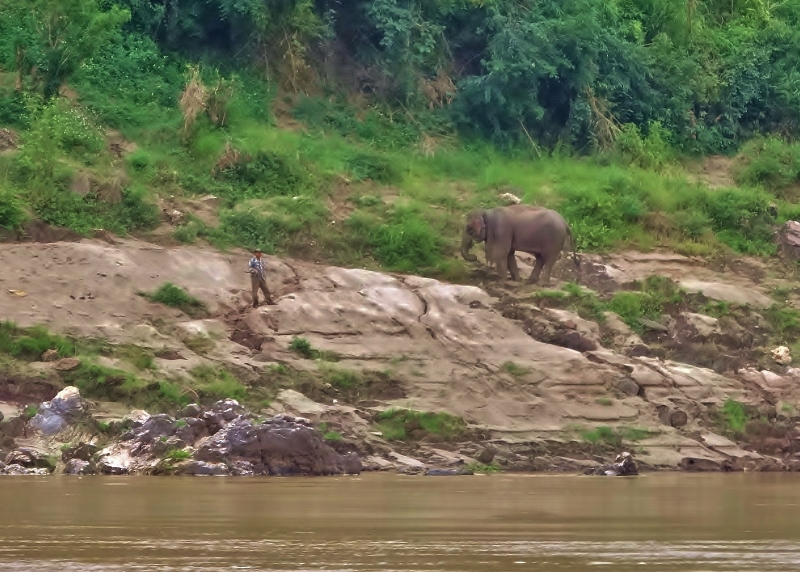
We all re-joined our slow boat and set off down the river before 8am. The scenery was much the same on our second day, but we did see an elephant with his mahout strolling on one of the beaches near Pak Beng. Everyone was impressed, especially Rodney, with the captain’s skilful handling of that extremely long boat through rapids and round rocks and other obstacles. I was also extremely grateful and pleased that we didn’t need the life-jackets. Thankfully the meals on board were far better than any meals we’d eaten on dry land in Laos, and the breeze created by the boat kept us all comfortably cool.
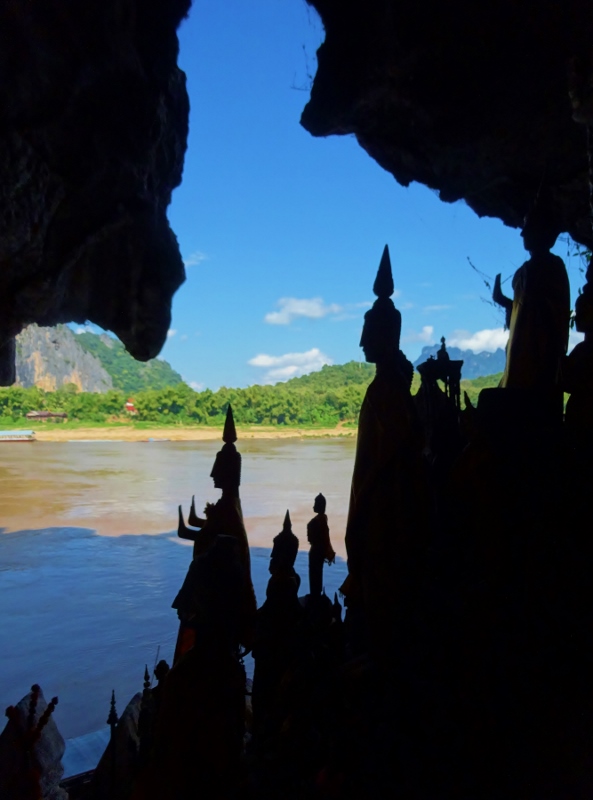
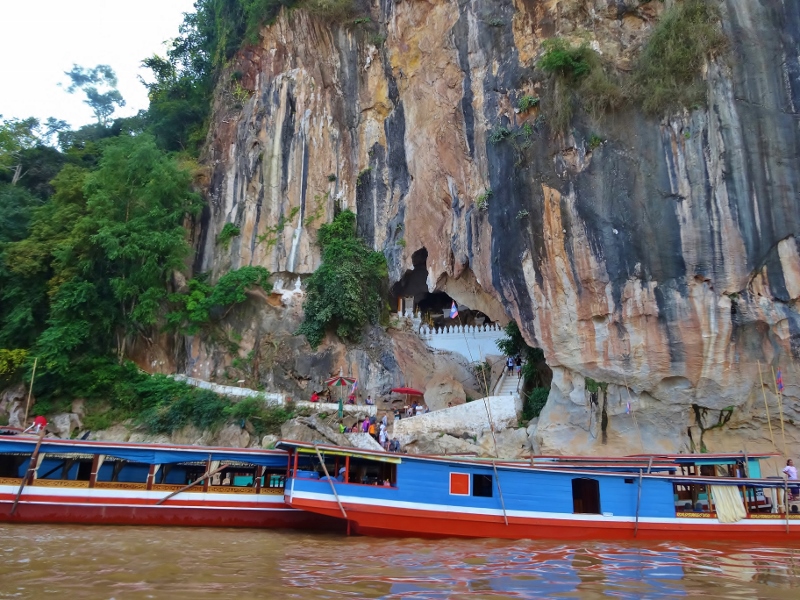
After lunch the boat pulled in twice; The first stop was at Pak Ou Caves at the mouth of the River Ou. There were steep steps up to the lower cave which was crammed with hundreds of dusty Buddha images, and perhaps just as many tourists inside the tiny space. Then there were lots more steep steps to the upper cave which was pitch black inside and seemed to be devoid of anything, but a couple more Buddhas. But there was a nice view out over the river and we needed the exercise after nearly two days resting on a boat.
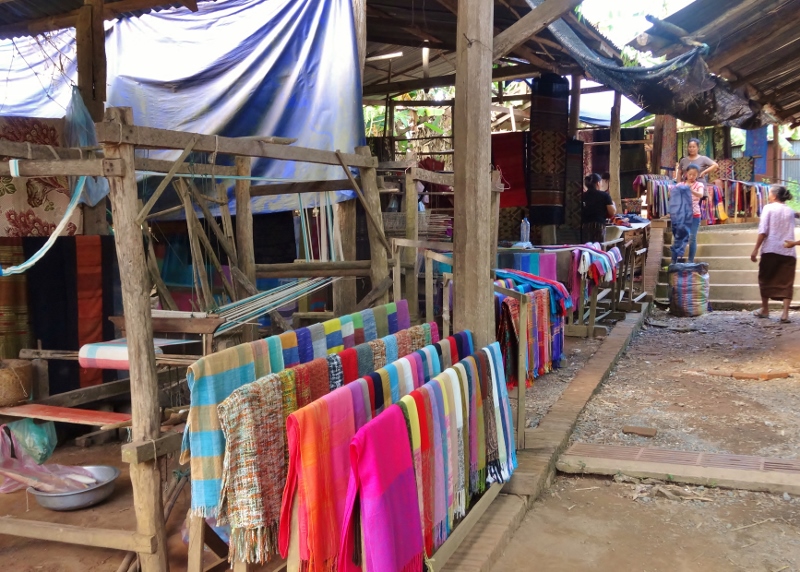
The second stop was the obligatory halt at a village selling handicrafts to any tourists that would part with their dollars. Ban Xang Hai, is a small village, which specialises in weaving fabric and scarves on wonderfully simple wooden looms. Everyone wandered up through the village, occasionally stopping to watch the ladies weaving and of course, everyone seemed to return to the boat with plastic bags full of purchases.
Our final stop was at Luang Prabang, where we were whisked by tuk-tuk (presumably that might mean that this hotel will be okay) round to the Lao Wooden Villa Guesthouse.
Kobchai (thankyou) to our guide Mr Komsa of Shompoo Mekong Cruising for smiling all the way; fourteen hours on board over two days; that’s a lot of smiling.