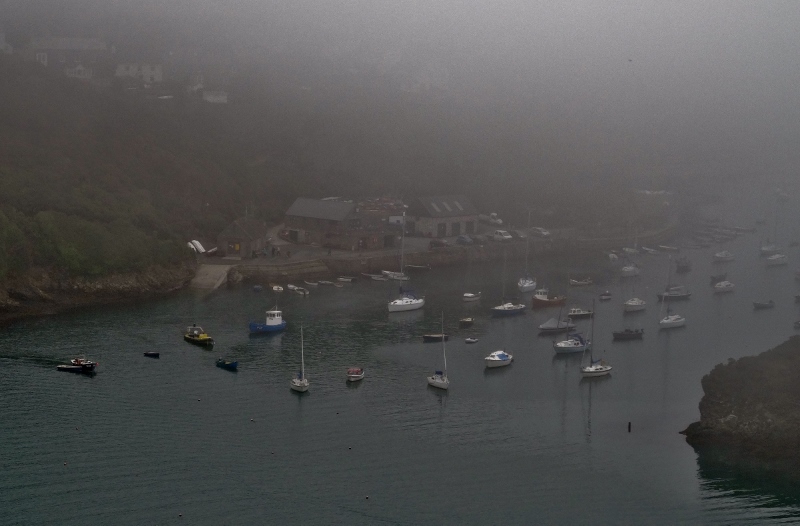
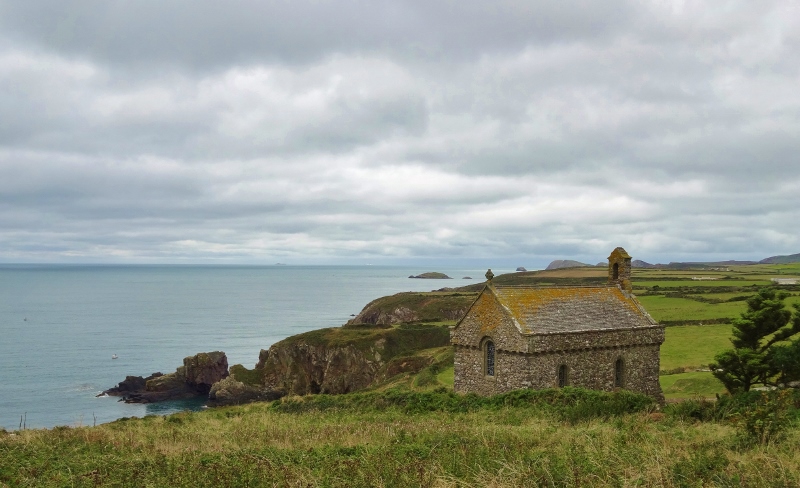
Our day started in proper retirement mode; a slow breakfast, a bit of newspaper reading (3 days old) and no urgency to our day. We watched as caravans, motorhomes and tents packed up and left, leaving us all alone at our end of field number three. But with the rain holding off, and not really wanting to blob around all day, we set off in search of another stretch of the Wales Coastal Path. The path passes just below the campsite, so we wandered out of the gates just above Caerfai Bay and headed west to St Non’s Chapel. The current chapel is only 78 years old and it is the most westerly chapel in Britain, but services are not held there due to the fact that the rain soaks through the 2 ½ feet thick stone walls when storms occur. St Non was the mother of St David and gave birth to him during a thunderstorm, maybe there’s something spooky in the connection?
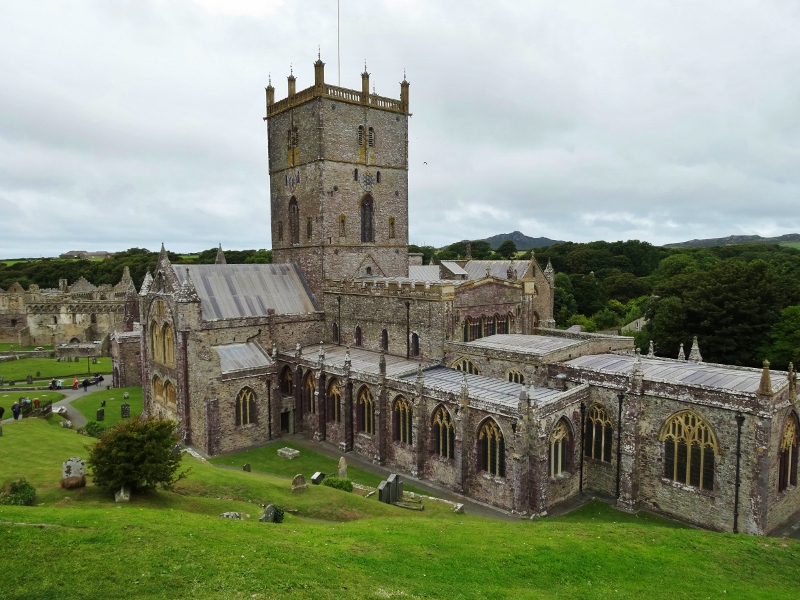
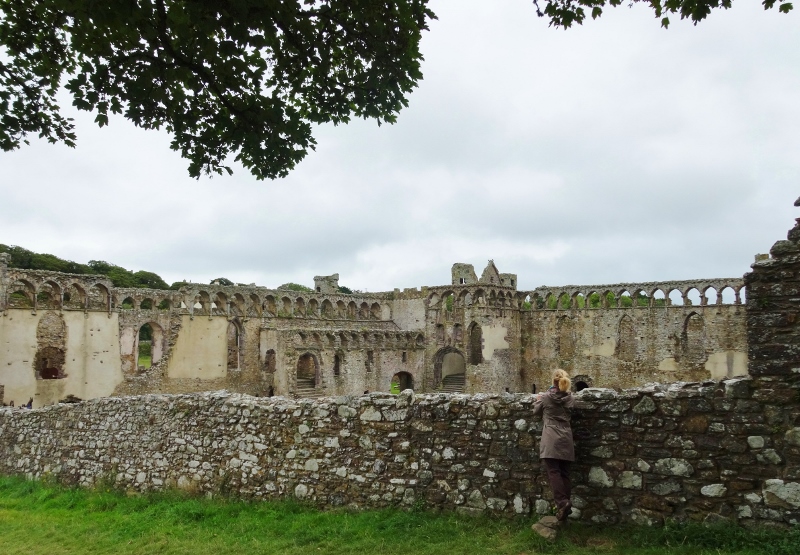
From St Non’s we followed footpaths across fields, opening and closing at least a dozen gates, until we finally reached St David’s, the smallest city in Britain. And it is tiny! The cathedral and the Bishops Palace, although tucked away in a dip on one side, seem rather too large for such a tiny ‘village’. Most of the palace is a ruin, but a lot of the 12thC cathedral has, and is still being, restored to its former glory. However when you stand inside it’s quite disconcerting to note that the whole building slopes uphill and the walls are bowing out in places. I hope the restorers and engineers have sorted that out….
After a stroll around the city, which took all of five minutes, we ate lunch in The Bishops Pub before walking along the road back to Eileen for an afternoon sheltering from the now pouring rain.
On Thursday morning, we showered a bit earlier and separately (plenty of hot water here) and then with a big cooked breakfast in our bellies, we set off east along the Wales Coastal Path. The sky was heavy with dark clouds and the ground was wet underfoot, but we were keen to walk to the village of Solva. This is yet another beautiful part of the Pembrokeshire section; more dramatic cliffs, beaches and endless islands. At Porth-y- Rhaw the view was stunning, or really would have been if only the sun had come out.
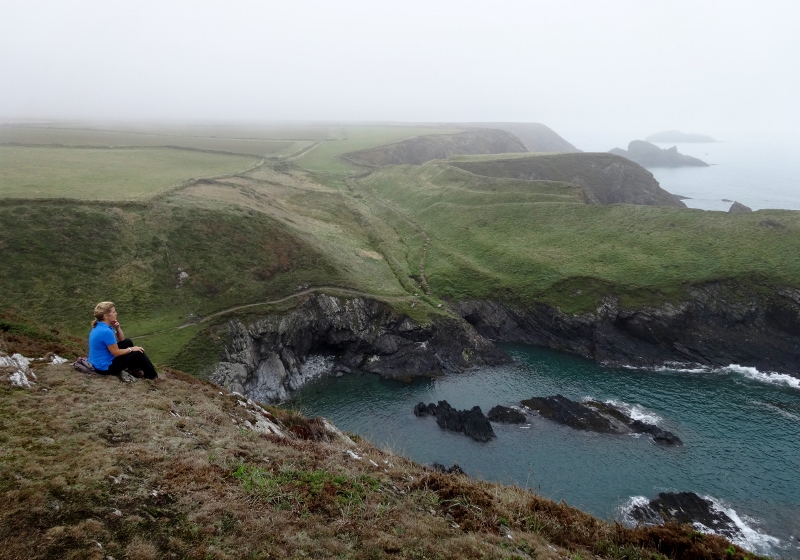
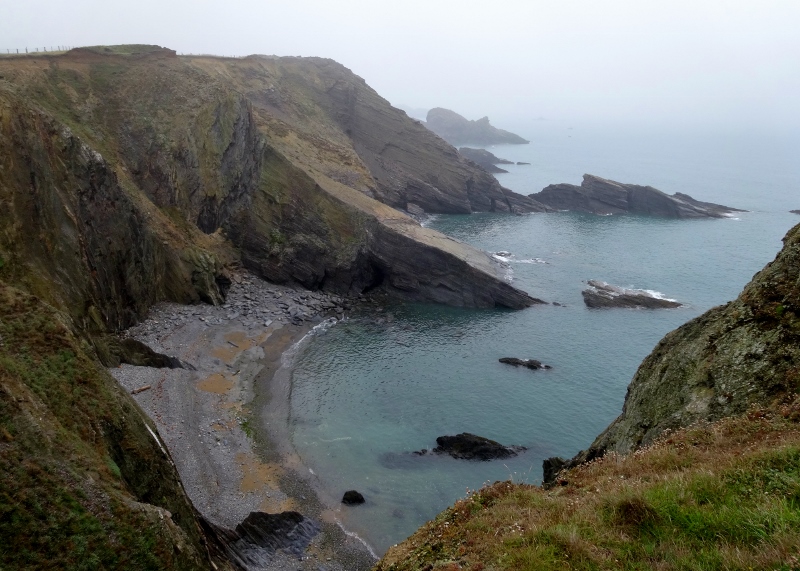
After walking about 9kms we reached the top of a cliff with views over Solva Harbour. It’s a curiously shaped harbour with rocks at the entry and a ninety degree turn in the middle, which probably makes it very sheltered. It’s hard to believe from its tiny size, but by 1900 there were apparently thirty ships registered there and nine warehouses. In 1840 you could sail on a ship from Solva direct to America and it cost all of £4, although that was probably a year’s salary back then.
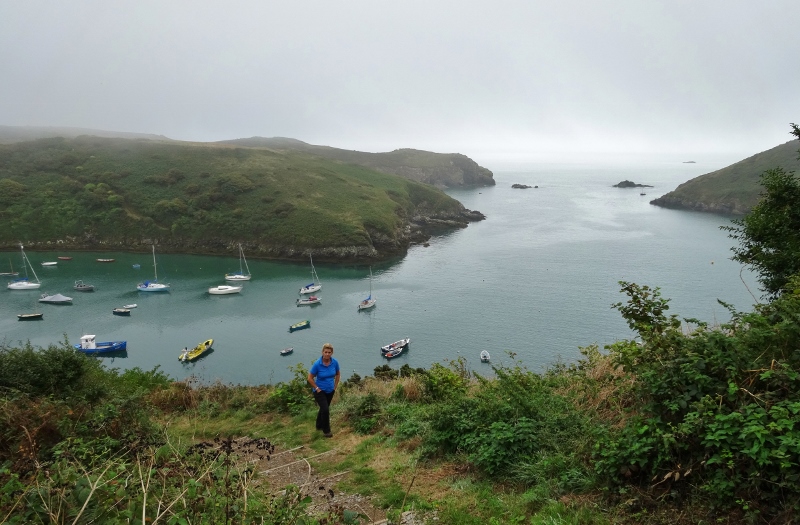
We wandered along past Trinity Quay, probably the scene of many sad goodbyes and on to Lower Solva and with a bit of energy still left, we walked up to The Gribin, a headland on the opposite side of the harbour. At the top there are views over the next tiny valley, the Gwadn and further down the coast towards Dinas Fawr and Newgale.
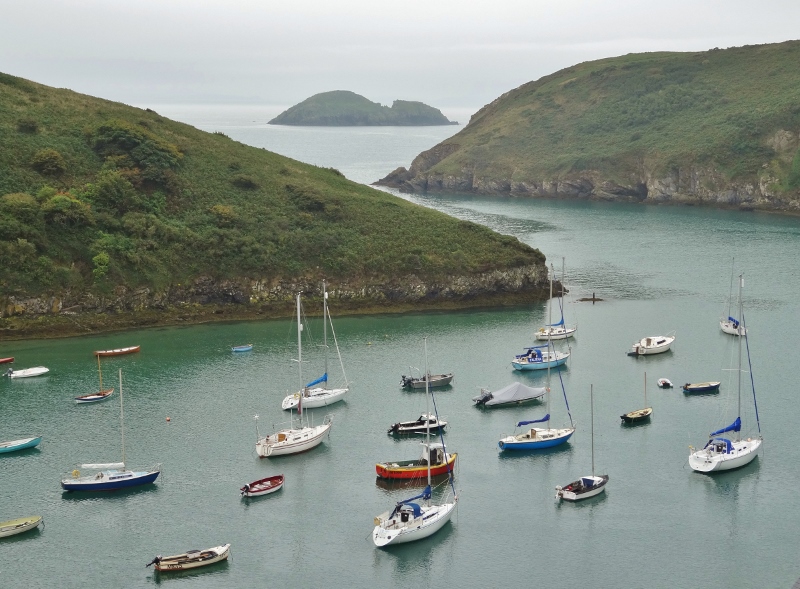
The mizzle came in again; it really wasn’t raining or even a drizzle, but it was more than a mist and any photos were just not going to come out. So we ambled back down to Lower Solva, popped in a shop and then hopped on the next bus that came through on route to St Davids. It was definitely time to get back to Eileen and snuggle down for the evening