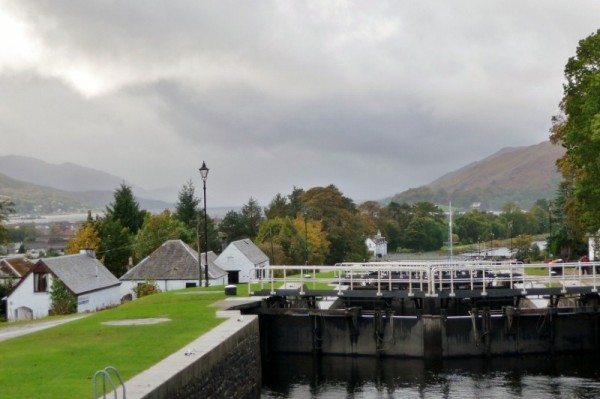
Monday morning started without rain……no not really…..it was still pouring. Officially fed up with the persistent rain, we sadly decided to give up on the West Coast and Skye, so we packed up and left our beautiful spot on Loch Linhhe. We drove north, just past Fort William to see Neptune’s Staircase at Banavie. It is a series of eight locks within less than ½ mile which lowers boats 64ft (19.5metres) at the point where the Caledonian Canal, coming down from Loch Lochie, opens out into Loch Eil and Loch Linhhe. It’s quite a feat of engineering and we always find canal locks a wee bit fascinating.
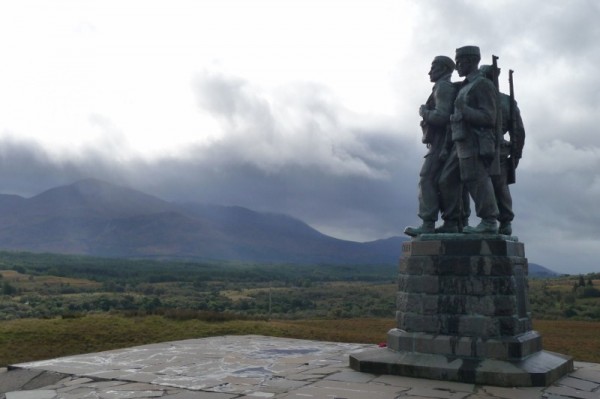
We triple checked the weather forecast and confirmed that a walk up Ben Nevis was definitely off the agenda for the foreseeable future. If we caught the gondola up Aonach Mor there would be no views apart from the inside of a cloud. The Fort William to Mallaig railway, which we were keen to do, would also be a very wet affair with mountains playing ‘now you see me, now you don’t’. So we decided to head north east and see if we could find some dryer weather. We stopped off at the Commando Memorial near Spean Bridge and then drove along the banks of Loch Lochy. Just after the Bridge of Oich (love that name), we finally saw our first red highland stag. He wasn’t in the wild, but looked quite happy to be in a fenced field, with a herd of females, and he looked absolutely magnificent.
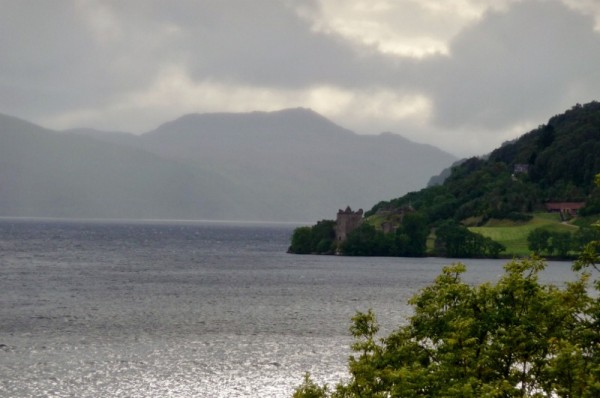
Continuing north we followed the banks of Loch Ness past Urquhart Castle and, despite keeping our eyes peeled, we didn’t manage to spot a monster at all. By now the weather was mainly dry and when we turned in to the campsite in Dingwall the sun came out and dazzled our eyes, but we’re not going to complain about that, for sure.
Though it did rain in the night, we finally woke up to a sunny, dry morning. Lordy be!
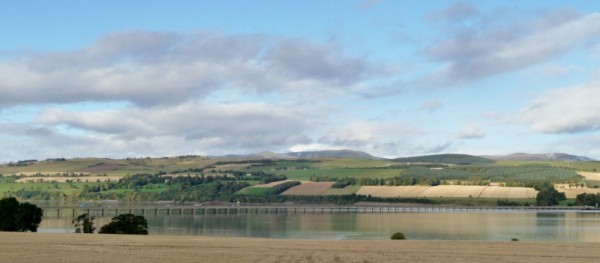
At the moment I’m reading ‘Attention All Shipping – A Journey Around The Shipping Forecast’ by Charlie Connelly and as we were staying near to the southern end of Cromarty Firth, we decided to drive over the bridge to the Black Isle and up to the top of the Cromarty Firth to see the small, picturesque village of Cromarty, which overlooks Nigg Bay and the Moray Firth and is described with great humour in the book. I’m sure anyone living in, or who has lived in, England will know the strangely fascinating, but somehow reassuring report heard over the radio several times a day. “Forties, Cromarty, Forth, westerly gale eight, veering south westerly, increasing severe gale nine later, visibility poor”. It seemed such a little place for such an important role.
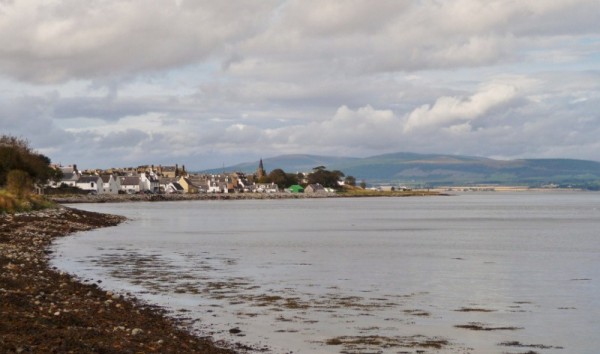
It was a lovely drive in the sunshine and after parking Eileen in Cromarty, we strolled along the waterfront and up through the woods to the top of the headland overlooking the Sutors. The car ferry service that runs across to Nigg on the other side of the narrows (apparently only when the weather is good), is the smallest in Britain, taking only two cars at a time.
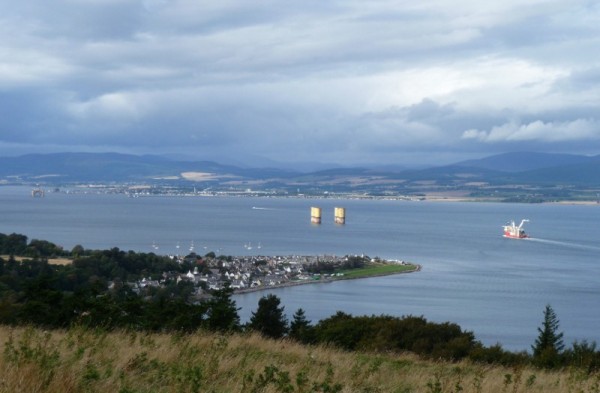
We took a different route back in to the village and wandered around the tangle of narrow lanes and roads full of a very varied mixture of buildings from tiny crofters’ cottages to lovely Georgian houses. It would have been nice to roam a bit longer, but the rain started up and we drove back to Dingwall with the wipers on yet again.
We heard on the BBC news that evening that the last man still speaking a local Cromarty dialect had died that day, a sad day for such a lovely place. Retired engineer Bobby Hogg, 92, was the last person who was still fluent in the dialect, but he had no-one to talk to. His younger brother Gordon was also a native speaker, but he died in April last year aged 86. The dialect is believed to have arrived in the area with fishing families thought to be the descendants of Norse and Dutch fishermen, who moved north from the Firth of Forth in the 15th and 16th centuries. It included great phrases like: “droog-droogle” for heavy work in wet weather and “At now kucka” for a friendly greeting. I might try and use both of them while we’re here…..
After a second night in Dingwall and wondering if Ross County beat Hibernian in the stadium right next to us, we decided to try heading west again.
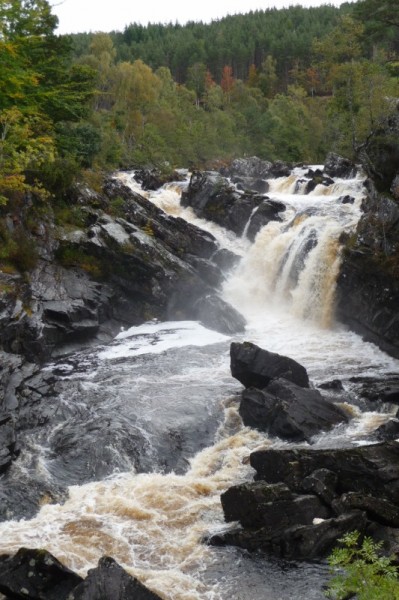
We stopped off to watch the River Blackwater tumble spectacularly over the Rogie Falls near Strathpeffer and then drove further north along the edge of Loch Glascarnoch to Corrieshalloch Gorge. A short walk down through the woods brings you to a wobbly suspension bridge which crosses the gorge directly above the impressive torrents of water which plunge over the Falls of Measach dropping fifty metres to the valley floor.
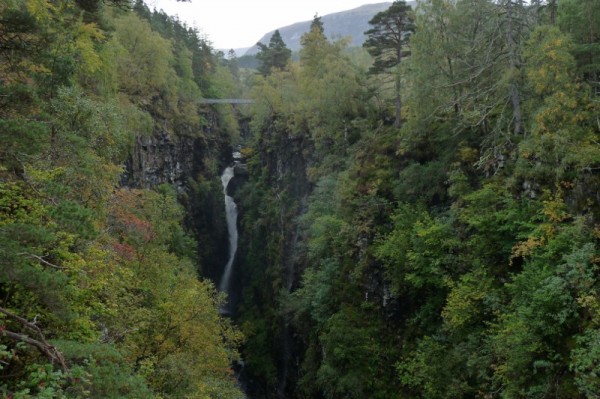
Throughout the whole drive today, the sun kept chasing the clouds away and then the rain would come back, before being chased away leaving rainbows, but we did still have all sorts of beautiful views along the whole journey. The bracken and grass across the moors and valleys are now a golden brown interspersed with a constant supply of waterfalls everywhere and we had to keep stopping just to breath in the beautiful views.
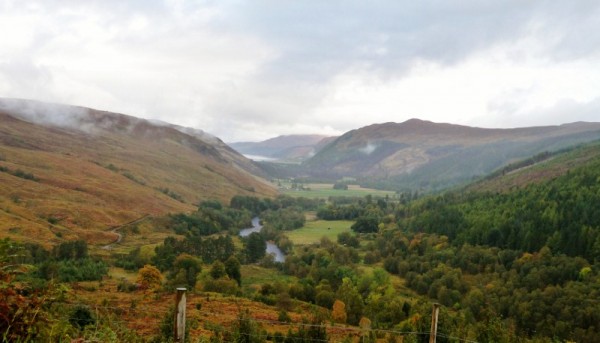
When we finally reached Dundonell we got our first glimpse of Little Loch Broom and the Atlantic Sea beyond.
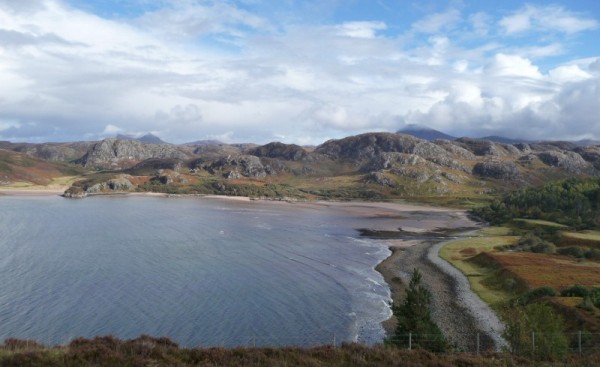
We followed the stunning coast road around Gruinard Bay and then over the peninsula to Loch Ewe, where we pulled in to the Inverewe Campsite near Poolewe. We wandered down to the local village to stretch our legs a bit more and then settled in for the night with just a road between us and the water’s edge.
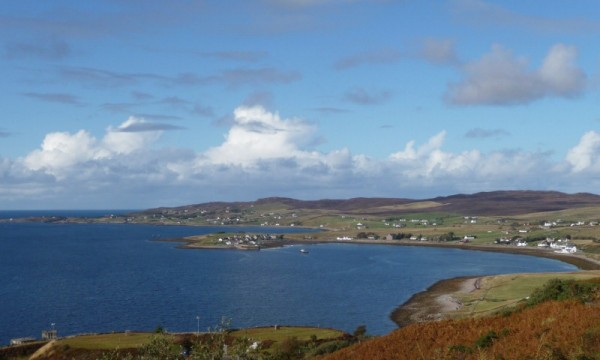
We woke up to a beautiful morning with a blue sky shining on the loch in front of us.
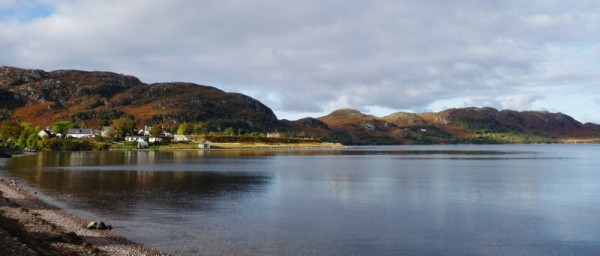
After a slow and lazy start to the day, we left Eileen and walked round to Inverewe Garden on the north side of the loch. It’s a lovely garden of 54 acres, set within 2,000 acres of woodland and moorland which is now owned by the National Trust. It’s unique in that it is full of exotic plants from all over the world, including Australia, New Zealand, the Himalayas, Chile, etc. They all flourish in this spot in Scotland because of the Gulf Stream and the south facing, sheltered position on the loch. We didn’t really expect to find much in flower in autumn, but were pleasantly surprised and really enjoyed meandering around the estate for hours. It made for a very relaxing day and we never had to put our raincoats on!
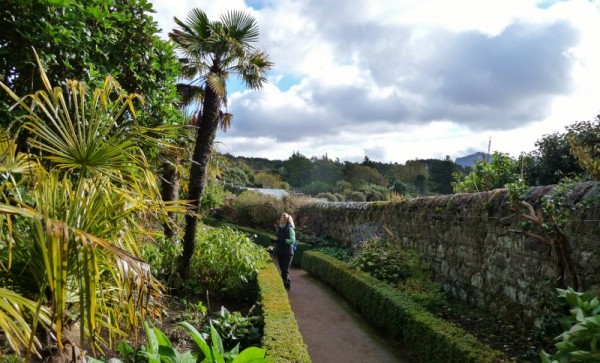
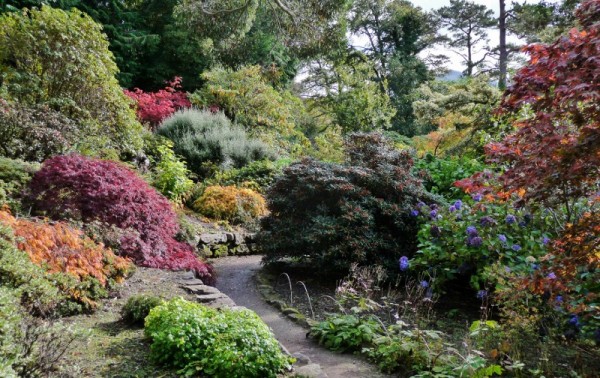
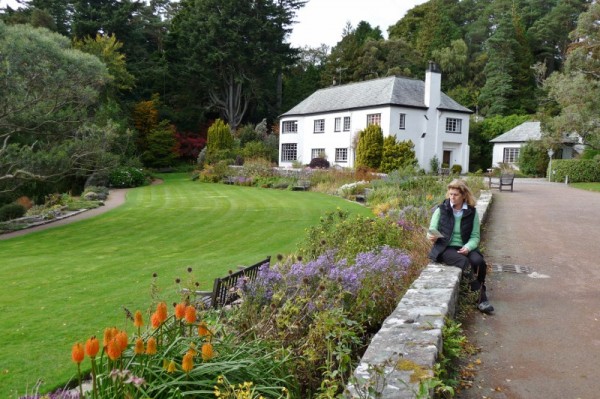
Only one thing niggled our day and that was when we got back to Eileen; we had to make the alarm go off, because our remote thingy wouldn’t work. Rodney managed to deactivate it from under the bonnet, but it was quite embarrassing having the noise blasting out in the middle of all the other campsite visitors, who were simply trying to enjoy the peace and quiet. We apologised profusely to the campsite owners and thankfully, they haven’t kicked us off the site.
I think they understand our funny accents, whatever we sound like……
Yep, it certainly is stunning, but I recommend a visit in kinder weather…..
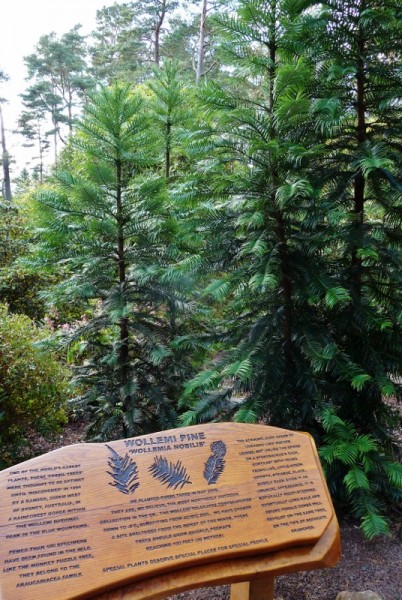
One other thing the last picture of the Wollemi pines, brought back memories of the Sydney Botanical Gardens with you. Also have a couple of Wollemi Australian red wines to drink when you and Rodney get back for a visit.
I had forgotten you had restarted the blog. Just caught up with all your travels, but I have got to say the pictures are fantastic considering the weather up there. They make us want to make a visit one day !!!.
What are the local people like? Can they cope with you ‘sassanach’s’ or are you using your Aussie passports up there in the lands of the Scots !