Life is what happens to you when you are making other plans

I felt a little sad to leave our pitch at Fuscolaro, but we couldn’t stay there for ever, enjoying the good showers, the lovely beach and the peace and quiet; we had places to go and towns to see. We drove around the Gulf of Taranto and across the ‘heel of Italy’ to Lecce. I had GPS co-ordinates for a ‘sosta campeggio’ (overnight parking spot) for Eileen, so we skirted the northern side on the ring road only to find a road that was dead. It was lunchtime, so we peered at every gate trying to work out if there was a sosta and maybe it was closed for lunch. At the far end we noticed what looked like empty flagpoles and deduced that perhaps we were on to it. Rodney hopped out to peek through the gates, only to find an empty waste-ground and no sign of life. However, someone had thoughtfully tucked a load of leaflets for a different sosta in the bars of the gate, so he grabbed one and we set off around Lecce to the southern side on the ring road, and down the S101 to Lequile.

We wanted to be near to Lecce and this was taking us way too far out to cycle in, plus it didn’t look like the sort of place that buses would pass more than once a day, if at all. But Rodney pushed on and when we arrived at the gates of the carpark, a smiling man appeared from nowhere and tried to persuade us to go in. We were still concerned about being so far from anywhere that also looked a bit dodgy, despite his professional looking leaflets. In the three way/two language conversation, no-one was quite listening to anyone, until Rodney said the word ‘bus’ to the smiling man. I attempted a bit of Italian, probably just eight words, and he attempted some English and we finally got the gist of the fact that “he was the bus”. There was one other campervan parked in the area, a German campervan, so we parked Eileen next to them and close to a tree, in an attempt to give her a bit of shade, as the heat of the day was really building. Then we made ourselves a, by now, rather late lunch. Smiley man came back with some paperwork and a gift of a little wooden owl under a welcome sign, which is now hanging over Eileen’s back door. Smiles and kindness.
At 3:30pm he turned up with a small minibus, opened the doors for us and drove us into Lecce, dropping us right next to one of the towering arches into the historical centre. We arranged to be picked up at 8pm and I checked the sosta leaflet was tucked in my handbag, just in case he didn’t turn up and we needed a taxi back. As we stepped out of the minibus, a German couple greeted us and stepped in for a lift back to their campervan, the one we had parked next to. It turned out all our concerns were unfounded, and Mr Smileyman was perfectly genuine and unexpectedly helpful. He did charge us as much as we normally pay for a campsite complete with bathrooms and sometimes swimming pools, he also charged us for the return trip into Lecce, but at least we had a safe place to stay and were able to get in and out of Lecce in the easiest way possible. So that’s all good, very good.
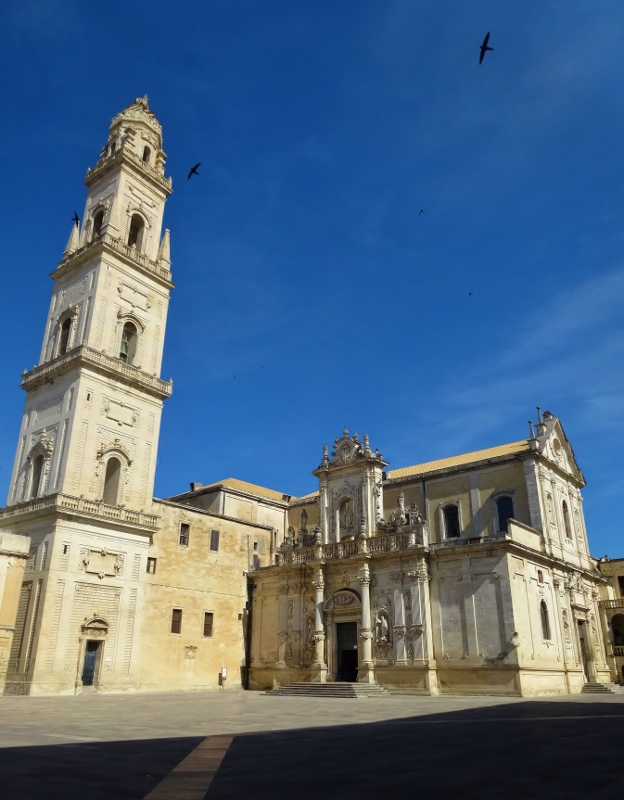

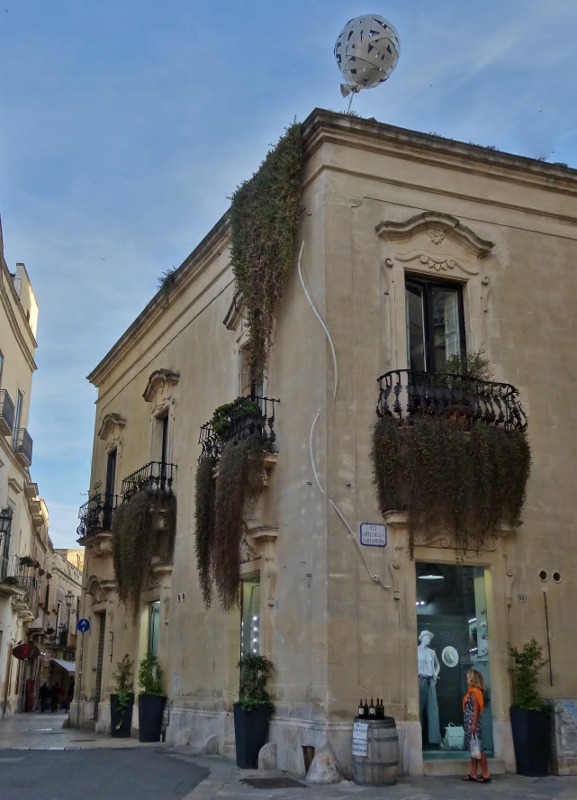
Lecce was a lovely town, it was very sleepy when we first arrived, but soon came to life and we did our usual amble and wander and roam. We found the tourist office and asked the question that was annoying us. “If you live in this province, do you live in Puglia or Apulia; we keep hearing both?” The young girl came back with “Yes, it is very confusing. We call it Puglia, but other languages call it Apulia”. I don’t know why, because my name is Alessia and if I go overseas people still call me Alessia”. We agreed that it was very silly how names of towns, provinces and countries have different names in different languages, Firenze v Florence, Toscano v Tuscany, Sardegna v Sardinia and Sydney v Syderney. So we agreed to say that we would always call it Puglia and would always call her Alessia, if we ever met again.
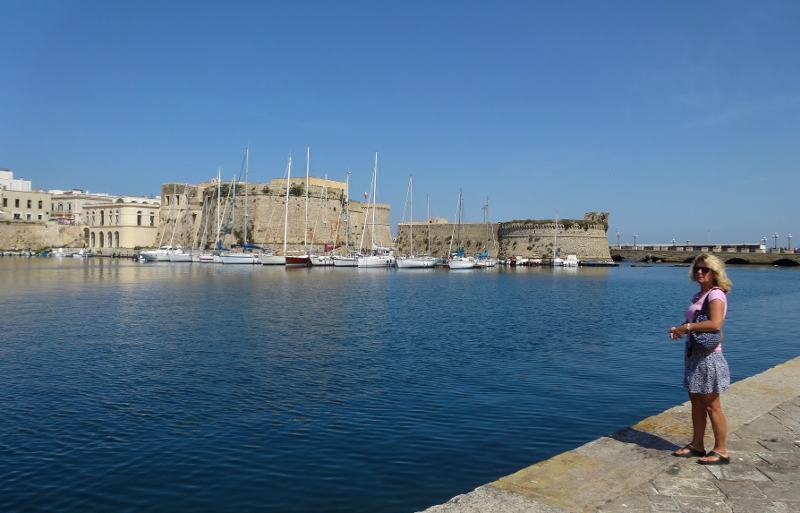
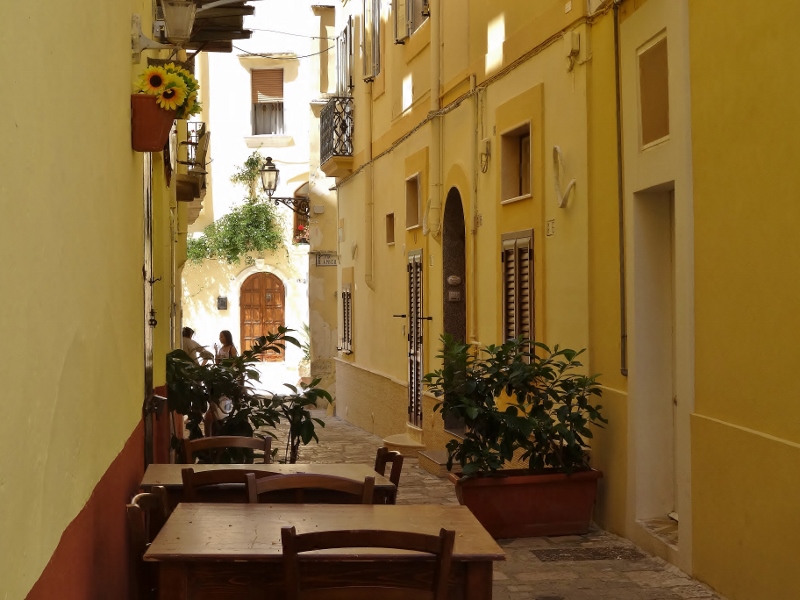
On Friday morning, as we were now south of Lecce, we thought we might as well carry on down to the coast of the Gulf of Taranto and check out Gallipoli; yes, the Italians have got one too. Walking along the waterfront to the walled historical centre was fabulous and we kept stopping to watch the fishermen sorting and mending their nets. I was amazed how they used both hands and one foot to hold and twist and knot the fine nylon string, and how quickly their hands moved in a constant rhythm, all the time shouting to their co-workers who were sat so close there was really no need to shout. But that seems to be the Italian way……



After a good mooch around the warren of tiny streets, it was still too early for lunch, but too late for morning tea, so we set off across to the Adriatic side of ‘the heel’. The scenery was one of continual ancient olive trees and derelict fortified farmhouses, Masseria. They were built to be self-sufficient and able to withstand the numerous invaders that came through Puglia, so it’s rather sad to see so many of them now as crumbling and unloved ruins. It turns out that Puglia has about 60 million olive trees and produces almost half of Italy’s olive oil. We can believe that, because as we came over the crown of a low hill, about two-thirds of the way across, we could see the coastline far away in the distance and the only thing between us was a sea of deep green olive trees. Some of them must be hundreds of years old, looking at the size of their gnarled and twisted trunks.
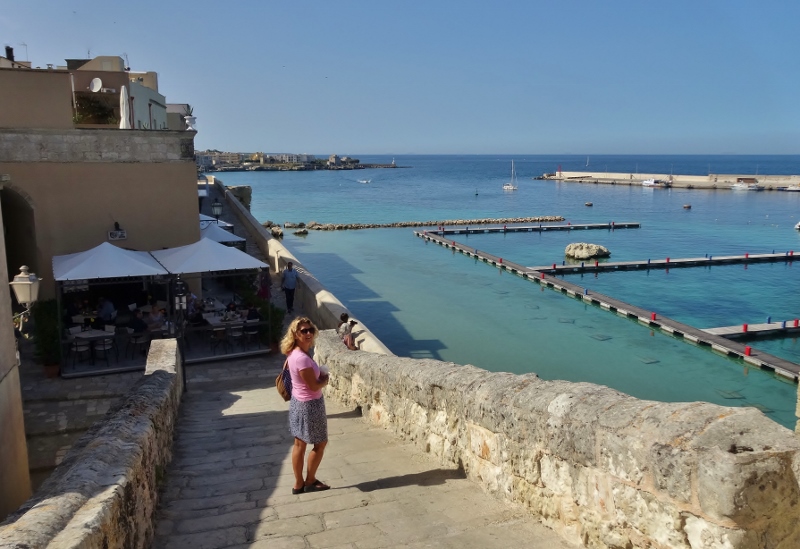
We found a perfect spot to park near the marina in Otranto and climbed the steps up to one of the gates into the old walled town. Otranto was a charming place, a maze of tiny whitewashed buildings set within huge fortified walls, all against the backdrop of the turquoise-blue Adriatic Ocean. The floor of the cathedral was an amazing site, though hard to see fully with all the chairs set in rows o it. The 11th C mosaic tiles create a picture that is a massive ‘tree of life’ and has various scenes from myths, from history and from the Bible. It felt wrong to be walking all over it and incredible to think that, despite all the footsteps on it, it is still there after so many centuries.


We ate lunch under clean white umbrellas, on fresh white tablecloths, beside pots of bay trees and a stone wall dripping with red bougainvillea. It felt Mediterranean, it felt Italian, it felt like what we had been expecting. We liked the town so much, we bought the tea-towel.

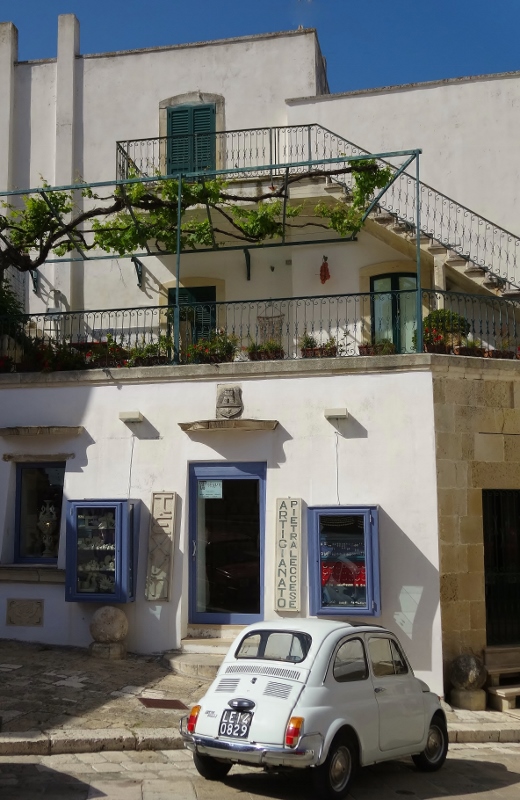
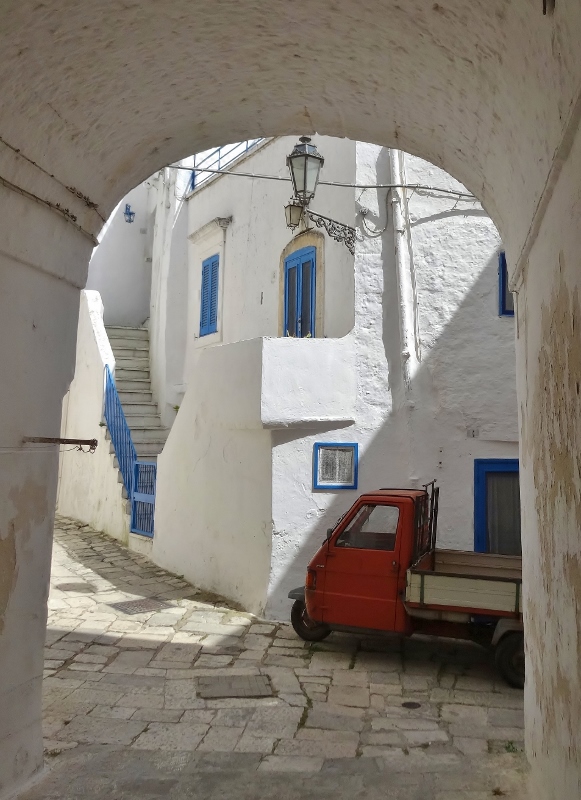
After a night at Camping Sentinella near Torre del Orso, we continued north up the coast, only stopping to stock up at the first big supermarket that we’ve seen in weeks. Our target today was Ostuni; we had read good things about the town and it all turned out to be true. The white buildings cascade down its three small hills and the whole place seemed to shimmer in the hot sunshine. When we climbed up from the carpark and stepped into the old town, we thought we could have been in Greece. Geraniums and petunias tumbled from balconies and were set in pots around doorways. It was charming and a lovely place to spend the day. The cheesecake gelato was really good too.


Camping Pineta Al Mare at Specciolla turned out to be not very speccie for two nights; it was going to be three nights, but there’s only squat toilets, the beach is awful and the swimming pool closes in the afternoon…. which I’ll never understand. But we needed a break from lovely old towns and there are a lot more of them to explore around this area, so we’ll make it just two nights and set off again on Monday.

Don’t know if you get to see these But HAPPY ANNIVERSARY